


Strengthening the social and behavioural science evidence base for mpox in Africa


Project overview
This study synthesised social and behavioural science (SBS) research findings and evidence on mpox in sub-Saharan Africa, to inform future submissions of SBS evidence to the mpox Emergency Committee. This dovetails with WHO, Elrha and FCDO initiatives to strengthen mpox SBS research and evidence-sharing.
Project solution
This project offers [specific solution or intervention] to tackle [challenge]. By implementing [strategies, tools, or innovations], the project aims to achieve [desired outcomes]. The approach is designed to [specific actions or methods] to bring about meaningful change in [community, region, or issue area].
Expected outcomes
This project aims to achieve [specific outcomes], such as [measurable results, improvements, or changes]. The expected impact includes [benefits to the target community, advancements in research or innovation, or long-term effects]. By the end of the project, we anticipate [specific changes or milestones] that will contribute to [broader goals or objectives].
Principal Investigator: Hayley MacGregor, Institute of Development Studies
What did the study set out to achieve?
This programme aimed to strengthen the social and behavioural science (SBS) evidence base on mpox in sub-Saharan Africa to inform WHO Emergency Committee deliberations. It responds to the limited SBS research findings for mpox available in the public domain, particularly regarding transmission, stigma, care-seeking, and lived experiences across diverse contexts. Activities included:
- Evidence Synthesis: Gathering and synthesising emerging and published SBS findings on mpox (Clade 1 and 2) from 2017 onwards, across the WHO Africa region. This involves mapping of funded research and published work, interviews with identified researchers, and a synthesis report.
- Support to an existing FCDO and Wellcome funded mpox project consortium to expand and implement SBS research and interdisciplinary integration.
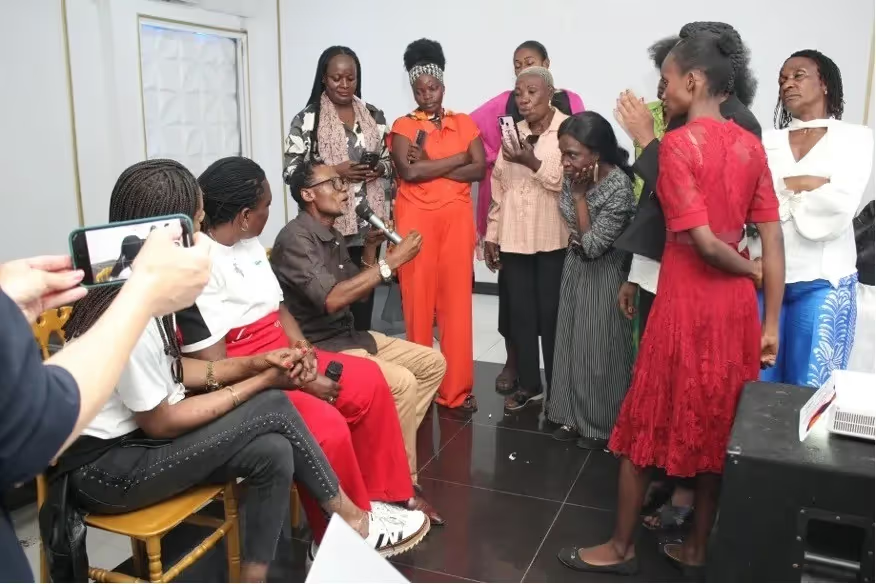
- Convening SBS researchers at a meeting to share findings aligned with operational priorities.
What were the key findings?
- The project mapped recent and ongoing mpox research and synthesised emerging findings. The team identified and mapped 50 studies and synthesised 13 in-depth studies.
- Team members attended meetings of the GECIVO mpox research consortium and strengthened the social science component, supporting better integration of social science and health systems enquiry with the other research activities.
- The project convened social science researchers and supported their engagement at the State-of-the-art Mpox Symposium in Kinshasa, December 2025.

Project delivery & updates
Stay up to date with the latest developments from this project. Here, you will find details on what has been delivered, resources created, and regular updates as the project progresses. Access key documents, reports, and other materials to see how the project is making an impact.