


Technology to Strengthen Humanitarian Surgical Capacity



This project is now closed.
What was the innovation?
The project examined the potential for technology and data-driven evidence to build humanitarian surgical capacity, resilience and preparedness in low-resource settings. It explored the current use of digital platforms and technology in surgical training delivery, and identified opportunities for and challenges to introducing sustainable models for training, knowledge exchange, data management and evidence-based research.
Why we need to innovate
A significant proportion of the health needs of communities affected by humanitarian crises require emergency surgical intervention. The increasingly specialised surgeons deployed from high-income countries are reliant on technologies that are not always available in low-resource settings. This results in gaps between their training, experience and the burden of injuries.
What was the opportunity?
The few surgical training courses that existed at the time were costly and heavily dependent on face-to-face training. By incorporating technology, the project aimed to deliver a sustainable and cost-effective training model, build consensus and understanding across the humanitarian sector, and provide the foundation for significant change in global humanitarian surgery.
Investment summary
Investment typeAccelerated innovation collaborations
People involved
Jon Barden, Rosemary Emodi, Mai Seida; Fellows: Raoof Ahmed Saleh, Ahmed Almaqadma, Isobel Marks, Lt Cdr Gerard McKnight, Marcella Ryan-Coker, Prof. Mohamed Seleem, Tim Tientcheu
Project length17 Months
Locations
United Kingdom
Collaborations


Fellows
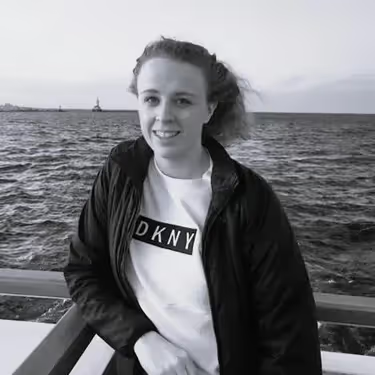
Isobel Marks
Surgery
Isobel Marks is a core surgical trainee at Great Ormond Street Hospital and a Royal College of Surgeons of England research fellow in humanitarian surgery, working in collaboration with the newly established Global Surgery Policy Unit.
She previously worked as a paediatric surgical outcomes fellow at Massachusetts General Hospital, and a research associate with the Program for Global Surgery and Social Change at Harvard Medical School.
She was also a junior trauma fellow at St Mary’s Hospital, London. Isobel coordinated the International Federation of Medical Students' Association Global Surgery Working Group for two years, and is a founder and former chair of InciSioN, the International Student Surgical Network.
Within the Humanitarian Surgery Initiative, Isobel is leading a qualitative study examining the experiences of surgeons working in conflict areas in the Middle East and North Africa.
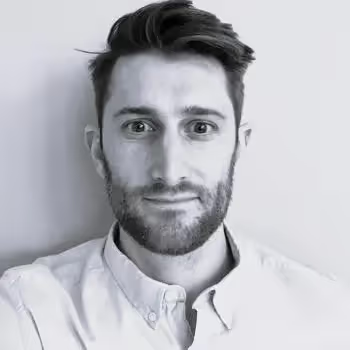
Surgeon Lt Cdr Gerard McKnight
Surgery
Gerard is a Royal Navy general surgery ST4, interested in trauma, emergency general surgery and global surgery. He has deployed across the world, including to the British Virgin Islands as part of the UK’s humanitarian response to Hurricane Irma in 2017.
As a Royal College of Surgeons of England Humanitarian Surgery Initiative fellow, Gerard is researching technology to improve training in low-resource settings.

Marcella Ryan-Coker
Surgery
Marcella is an orthopaedic and trauma surgery resident in Nairobi, Kenya, previously working as a surgical medical officer in Freetown, Sierra Leone, with humanitarian NGO Emergency.
She has an MSc in global health and development from University College London, and the Edinburgh surgical sciences qualification from the University of Edinburgh; and completed a course in global surgery at the University of Oxford. Marcella is the immediate past chair of InciSioN, the International Student Surgical Network (Sierra Leone), and an outgoing member of the Gender Equity Initiative in Global Surgery Research Council.
As a Humanitarian Surgery Initiative fellow, Marcella’s research focuses on the cost of surgical training for trainees in sub-Saharan Africa. She contributes to several research projects, including a multinational survey to evaluate the efficacy of video learning in surgical education, defining humanitarian surgery, and creating an online course provider directory for global, humanitarian and trauma surgery.
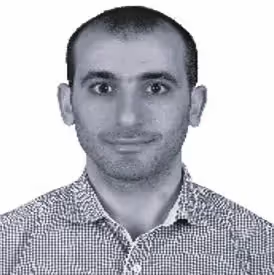
Ahmed S. Almaqadma
Surgery
As Humanitarian Surgery Innovation fellow, Ahmed contributed to several research projects, including a multinational survey to evaluate the efficacy of video learning in surgical education in low- and middle-income countries, defining humanitarian surgery, and webinars featuring surgical voices from the global South.
Ahmed was killed in April 2024, during the Israeli Defence Forces (IDF) action on al-Shifa hospital in Gaza.
Prof. Mohamed Youssef Seleem
Surgery
Mohamed graduated from the Kasralainy School of Medicine at Cairo University in 1977, achieving a master's degree in general surgery in 1982 and doctorate in 1989. He has been performing laparoscopic and obesity surgeries since 1991.
Mohamed was in charge of surgical training in the Egyptian Ministry of Health for five years, and has been head of continuing medical education in the Egyptian Medical Syndicate for 10 years. He has been a consultant for two Egyptian ministers and is a member of the Society of American Gastrointestinal and Endoscopic Surgeons' Global Affairs Committee. In the past 15 years, Mohamed has organised two conferences on medical practice in low-resource settings and ways to cut costs in obesity surgeries.
His humanitarian journey started 20 years ago. Mohamed has been a team leader in more than 15 medical convoys in sub-Saharan African countries, and established a digital educational platform for patient education. As a Humanitarian Surgery Initiative fellow, Mohamed contributes to research, including webinars featuring voices from the global South. He also formed a group to study the possibility of remote training for surgical skills.
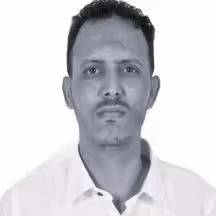
Raoof Ahmed Saleh
Surgery
Raoof Ahmed is a general surgeon at Kilo hospital in Yemen’s southern Ibb governorate, with certificates in general surgery from the Yemeni Medical Council and Arab Medical Council.
He has worked with MSF as a humanitarian surgeon since 2016 and in the past year has supported surgical teams in conflict areas in Yemen, performing trauma, vascular and reconstructive surgeries on the front line.
As a Humanitarian Surgery Initiative fellow, Raoof contributes to research projects, including a study on the effect of conflict on pre-existing surgical workforces, a multinational survey to evaluate the efficacy of video learning in surgical education in low- and middle-income countries, defining humanitarian surgery, and webinars featuring surgical voices from the global South.
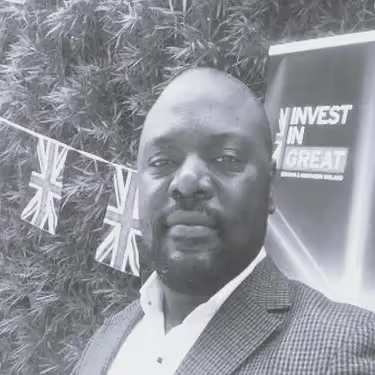
Tim Fabrice Tientcheu
Surgery
Tim trained as a general surgeon at the University of Yaoundé I, Cameroon, and holds an MSc in global health and global surgery from King’s College London.
He is a consultant general surgeon at the Central Hospital of Yaoundé, lecturing part-time in the Faculty of Health Sciences at the University of Bamenda; and has experience in delivering primary and emergency health care and managing public health projects in low-resource settings in Africa. Tim is global surgery lead with humanitarian NGO ASCOVIME, delivering humanitarian surgical care and coordinating the surgical simulation project.
He is passionate about global surgery advocacy, building the National Surgical Obstetric Anesthesia Planning process and humanitarian health care. As a Humanitarian Surgery Initiative fellow, Tim contributes to research on the efficacy of digital innovations in surgical training in low- and middle-income countries.
Attachments
Life on the Line: Reshaping Humanitarian Surgery
This Call to Action built on the work of the Humanitarian Surgery Initiative outlining ways we can develop a significantly more effective and better-resourced humanitarian surgery sector.
Humanitarian Surgery Initiative
Watch webinar recording
Watch the recording for our webinar that took place on Thursday 31 October 2024 to explore and discuss the future of humanitarian surgery.