


Caring for carers: A psychosocial supervision intervention for mental health practitioners

Project overview
Determining the impact of a psychosocial supervision intervention for mental health professionals to improve the quality and sustainability of mental health and psychosocial services in humanitarian contexts.
Countries
Bangladesh
Syria
Turkey
Organisations
University of New South Wales
Partners
Hope Revival Organisation, KoÒ« University, Dhaka University, MHPSS working group Cox’s Bazaar Suicide Prevention Sub-group
Area of funding
Humanitarian Research
Grant amount
£719,712
Start date
01
November
2021
End date
30
September
2025
Project length (in months)
Funding calls
Topics
No items found.
Status
Closed
Project solution
This project offers [specific solution or intervention] to tackle [challenge]. By implementing [strategies, tools, or innovations], the project aims to achieve [desired outcomes]. The approach is designed to [specific actions or methods] to bring about meaningful change in [community, region, or issue area].
Expected outcomes
This project aims to achieve [specific outcomes], such as [measurable results, improvements, or changes]. The expected impact includes [benefits to the target community, advancements in research or innovation, or long-term effects]. By the end of the project, we anticipate [specific changes or milestones] that will contribute to [broader goals or objectives].
Dr Ammar Beetar
Hope Revival Organisation
In life incidents happen. You go through some difficult moments with your spouse and others. Having someone there to help you through gives you a sense of reassurance. In a way it passes safely. It is like having a guardian angel. Being supervised in practice gives me almost the same feeling. It feels good that no harm will take place to me, my colleagues or to the beneficiaries with someone overseeing that everything remains within the boundaries of the profession. No matter how hard and challenging the situation I,m dealing with is, as long as there is someone who can bring me back to my senses and lend me a hand when I need, I can make it through with an ever-increasing sense of confidence and competency.
Principal Investigators: Ruth Wells and Simon Rosenbaum, University of New South Wales
Research Snapshot: Clinical supervision for humanitarian mental health workers
Clinical supervision significantly benefited mental health and psychosocial support (MHPSS) practitioners working in Türkiye/ Syria, improving wellbeing and reducing burnout: but results are affected by context and implementation factors.
[.cta_link]Read the Snapshot[.cta_link]
What did the study set out to achieve?
Local MHPSS practitioners in humanitarian settings often face the same challenges as the communities they serve. Supervision may play a role in supporting their wellbeing and ensuring service quality. Recent evidence has highlighted the need for culturally and contextually appropriate supervision models for MHPSS frontline workers in humanitarian settings, while evidence gaps exist on how to prevent burnout. However, implementation, contextual and cultural factors must be addressed to ensure cultural responsiveness of supervision
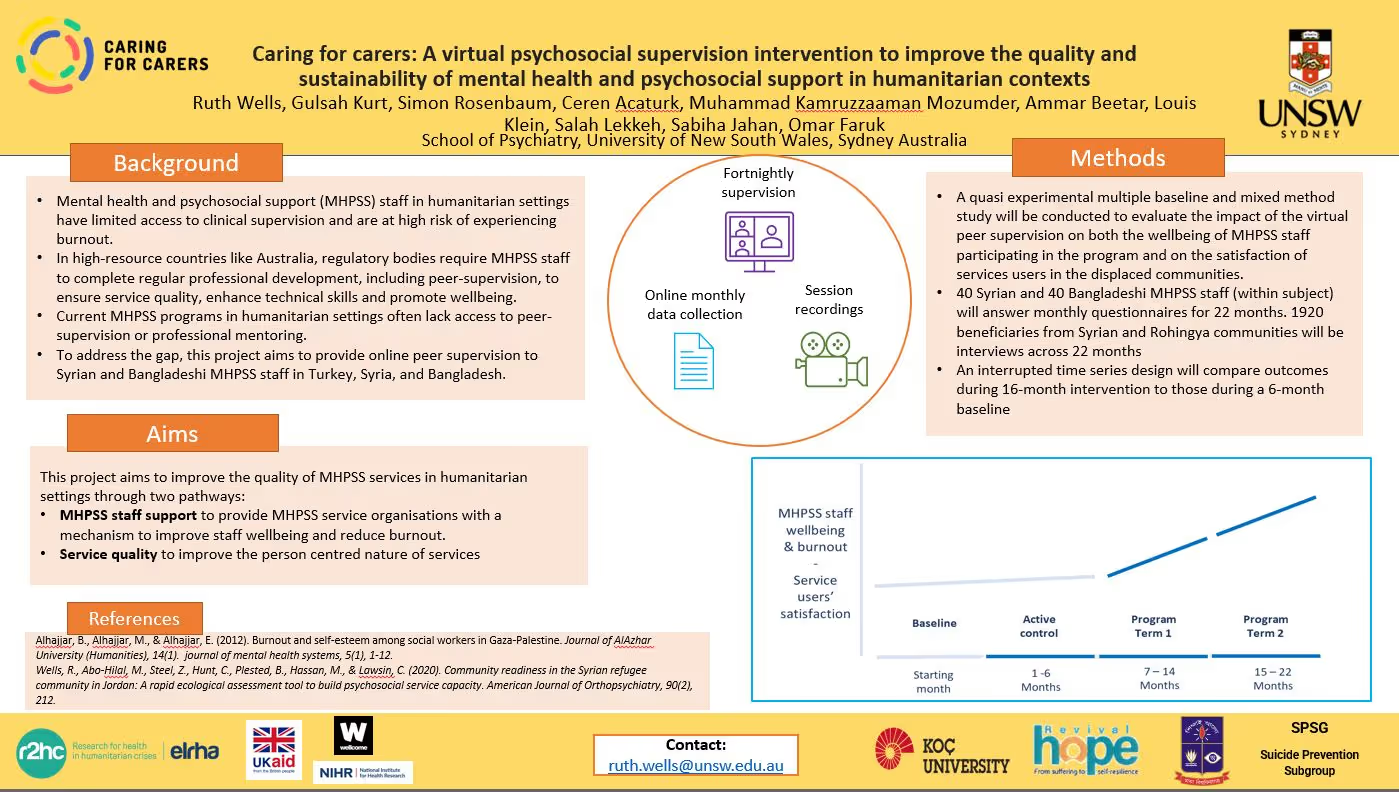
This quasi-experimental, mixed methods study compared wellbeing outcomes of a co-developed context-specific supervision program for 6 months before the program, and then during the 16-month online supervision program in Türkiye/NW Syria and Bangladesh. Service user interviews were conducted to assess service satisfaction and understand priorities for MHPSS services.
What were the key findings?
The Caring for Carers study examined how online fortnightly group supervision impacts MHPSS practitioners in two challenging humanitarian contexts: Syrians in Türkiye/Northwest Syria and those working with Rohingya communities in Bangladesh. Supervision was associated with improved MHPSS practitioner wellbeing. However, effectiveness of supervision (and its benefits for practitioners) depend on context and implementation factors. Supervision may also support MHPSS services that are responsive to community priorities. More research is needed to understand whether positive impacts on practitioners translate to quality improvements or positive outcomes for service users.
Improvements in wellbeing: In Türkiye/NW Syria, practitioners reported significant improvements in compassion satisfaction (sense of meaning from helping work) and reduced clientrelated burnout during supervision compared to the control period. The online supervision model continued during the 2023 earthquakes, providing crucial support.
Service users: More than 90% of service users in both settings rated the quality of service they received as excellent or good. Follow up service user interviews (378 with displaced Syrians) revealed that what mattered most to them was time and understanding (62%), dignity (43%), confidentiality (36%), and continuity of care (31%).
Context and implementation barriers: In Bangladesh, no overall improvements were observed in practitioner wellbeing compared to the active control period. However, practitioners who attended more sessions reported significantly better wellbeing. Implementation factors like internet connectivity, work interruptions, and practitioner self-efficacy significantly influenced outcomes, demonstrating that supervision effectiveness is context-dependent.
What does this mean for policymakers and practitioners?
MHPSS programs should integrate regular supervision as standard practice to enhance practitioner wellbeing and service responsiveness. By supporting compassion satisfaction and client burnout, supervision may help practitioners develop the trusting relationships beneficiaries prioritise, potentially improving service effectiveness.
A key question still to be addressed is whether the positive benefits of supervision for practitioners translate into improved service quality and positive outcomes for service users. Funders should balance scale-up goals with protected time for supervision and empathetic care delivery.
Localised supervision models that address contextual barriers- like internet connectivity, short-term contracts and employment insecurity- are essential for successful implementation. Investment in supervision can strengthen MHPSS workforce sustainability and improve service responsiveness in humanitarian settings. With the mainstreaming of MHPSS, supervision may benefit other professionals providing psychological first aid or case management.
No items found.
Project delivery & updates
Stay up to date with the latest developments from this project. Here, you will find details on what has been delivered, resources created, and regular updates as the project progresses. Access key documents, reports, and other materials to see how the project is making an impact.
No resources/updates have been published yet for this project. Sign up for our newsletter to stay informed about upcoming publications and updates!
Join our Newsletter
Resources
Testing the effectiveness and acceptability of online supportive supervision for mental health practitioners in humanitarian settings
Journal article
LEARN MOREAddressing the mental health needs of those affected by the earthquakes in Türkiye
Journal article
LEARN MOREClinical Supervision across Australia, Türkiye, Syria, and Bangladesh: From WEIRD to WONDERFUL
Journal article
LEARN MORELatest updates
No items found.