


The 16 Days of Activism: Innovating GBV response amid global challenges
.avif)


Every year, the 16 Days of Activism Against Gender-Based Violence (GBV) mobilises millions worldwide to demand an end to violence against women and girls. This year’s campaign comes at a time of unprecedented challenges, with over a third of women’s rights organisations reporting having to suspend or shut down GBV programmes.
Through events online and in-person, our GBV lead, Ian Brightwell has been advocating for the important role that humanitarian research and innovation can play, despite cuts to the humanitarian sector and the unabating opposition to protecting women and girls from GBV.
Pushing back against shrinking space
Attending the Annual Partners Meeting of the Global Call to Action on Protection from GBV in Emergencies, in Oslo on 2 and 3 December, was an opportunity to hear Norway’s vision for the group as chair of the secretariat and to contribute to strategy development for the next five years.
Participants, including women leaders from around the world, were acutely aware of the scale of the cuts to humanitarian funding, as well as the increasing risks faced by women’s rights organisations and women leaders confronted with anti-gender movements, shrinking civic space, and a backlash against gender equality.
Speaking about the importance of localisation in line with Grand Bargain commitments, Sarah Cornish Spencer, Chair of our GBV Technical Working Group, stressed that localisation without gender is not a cost-effective solution for communities affected by crisis. The needs and risks of women and girls should be specifically addressed with GBV response services, alongside transformative empowerment work that promotes gender equality. As one participant put it:
“We need to start seeing a backlash against the backlash.”
How tech could transform GBV training and service delivery
At the start of the 16 Days, we showcased two interventions that could be part of the pushback in favour of GBV survivors in the Arab Region. Our webinar mini-series featured two exciting projects from our GBV Tech Innovation Challenge cohort:
- Creating virtual reality (VR) and digital training tools for Iraqi humanitarians to better understand and empathise with GBV survivors, if they encounter someone making a disclosure.
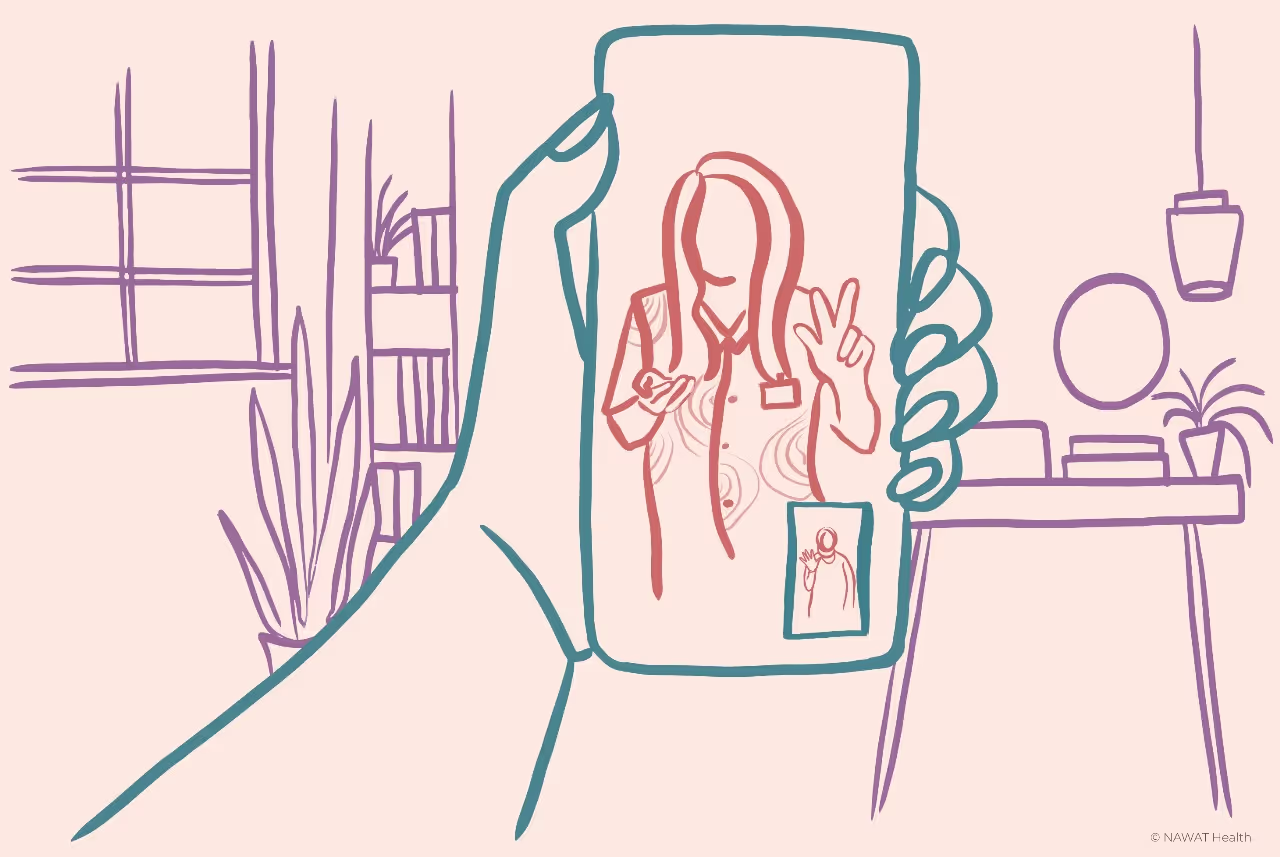
- Developing Nawat, a web and app-based portal for GBV survivors in Iraq, Palestine and Yemen to access health information and counselling.
The presentations included testimonials from users in Iraq and Yemen. Through questions to the panels, we saw keen interest in how risks were mitigated, how users experienced interventions and how survivor perspectives were incorporated. Panellists also shared how people can build on this work or get on board as early adopters.
Watch webinar 1: Developing tech-based GBV training using Virtual Reality in Iraq.
Watch webinar 2: A humanitarian partnership to deliver online health information and counselling.
Find out more about the webinars on our event page: Webinar Series: Using tech to reimagine GBV training and service delivery in the Arab Region.
Understanding how it feels to work on a humanitarian innovation
Innovation doesn’t stop at tech. Our Innovation Insights interview series, which we’ve been sharing on social media throughout the 16 Days, highlights diverse approaches shaping GBV response. We asked innovators to reflect on the highs and lows of the innovation process they've worked on and to share their personal perspectives - what do they see as most important, and what’s driven them to keep going when it got tough. Here are links with a taster of what to expect from each interview.
Nawat, an online sexual and reproductive health information and services platform.
“I launched Nawat because I wanted to create the kind of space that I wish had existed for me, and for so many women across the Arab world."
Using virtual reality for humanitarians to empathise better with survivors.
“That was the moment I knew the VR experience had done more than train a person – it had transformed them."
MediCapt, survivor-centred, digitised forensic documentation.
“It was amazing to hear the difference MediCapt was making. Other programmes in the IDP camp lost their patients’ files and other critical documentation, yet our partner’s MediCapt files were preserved."
You can also read about:
- ARCHES, a harm reduction intervention against reproductive coercion, which has shifted power, confidence and agency to women and girls in Cox’s Bazar.
- Sensemaking for real-time analysis of GBV risks which works as a tool providing what frontline service providers said were some of the most candid and powerful descriptions of gendered risks they had ever encountered.
- Laaha, a virtual safe space for women and girls in humanitarian settings. It is more than just a tech innovation - it is a process of co-creation and ethical design, with a deep commitment to shifting power to girls themselves.
- The Inclusive Humanitarian Programme for identifying and addressing gender bias, which not only led to people becoming more aware of gender bias but also saw them actively working to challenge it, pushing for change within their organisations.
- Outcome scales to improve GBV case management, which one case manager described as a turning point in their work with a survivor, highlighting the need for additional support beyond case management.
What’s next?
We’re pulling together lessons and good practices that we identified through our GBV Tech Challenge. To join the online event in the first quarter of 2026 where we’ll discuss what we learnt, and to be first to know when the key findings are published, register here.
Stay updated
Sign up for our newsletter to receive regular updates on resources, news, and insights like this. Don’t miss out on important information that can help you stay informed and engaged.

Related articles

Explore Elrha
Learn more about our mission, the organisations we support, and the resources we provide to drive research and innovation in humanitarian response.