


Closing the R2HC chapter: Reflections on a transformational programme
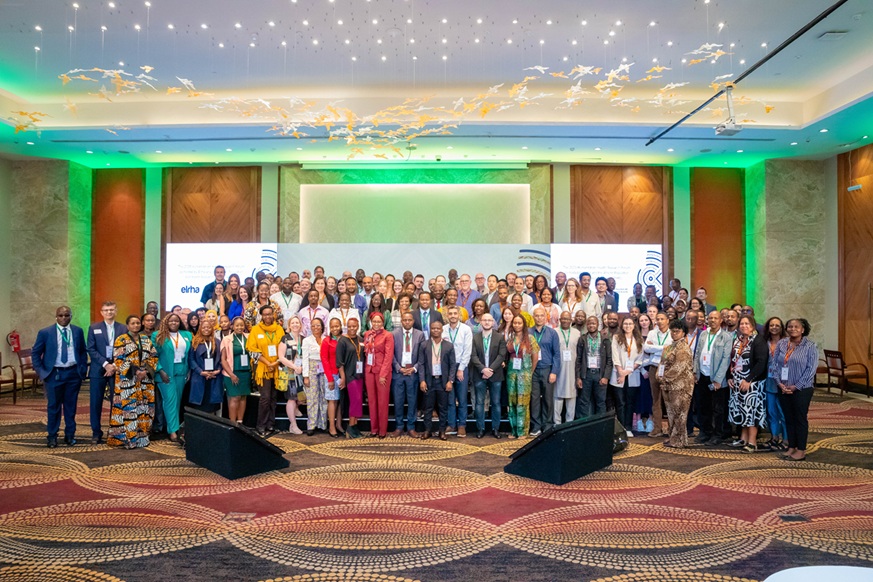


As our Research for Health in Humanitarian Crises (R2HC) programme comes to a close, we are taking a moment to reflect on what this investment has achieved, and why its legacy matters for the future of humanitarian health. Over the past 13 years, R2HC has shown that targeted, strategic funding can transform not only the evidence base for crisis response, but the systems and partnerships that sustain it.
R2HC set out to do something ambitious: bring rigorous, policy-relevant research into the heart of humanitarian response. The programme delivered impact in ways that are measurable, scalable, and lasting.
Evidence that shaped humanitarian policy and crisis response
R2HC funded studies have informed WHO guidance, Sphere Standards, national health protocols, and operational standards across multiple crisis settings, as our library of impact case studies and our 2025 round up of research shows. Through responsive calls focused on Ebola, COVID-19, food Insecurity and mpox, we ensured frontline decisions were grounded in high-quality evidence, leading to tangible changes in policy and practice.
“Elrha's R2HC programme enabled WHO and partners to rapidly generate community evidence during active mpox and Ebola outbreaks, reaching hundreds of community members and informing response actions affecting millions. Their investment didn't stop there: it also produced an interagency operational research protocol and toolkit, ensuring those lessons are embedded in how we respond to future outbreaks and humanitarian crises.” — Dr. Nina Gobat, Senior Technical Advisor, WHO Health Emergencies Programme
Raising the quality of humanitarian health research, and building a community
The Humanitarian Health Evidence Review (HHER) mapped the evidence base for humanitarian health interventions and has been cited more than 300 times, helping shape research priorities across the sector.
R2HC also supported research priority-setting exercises on sexual and reproductive health and rights, WASH, mental health and psychosocial support, and non-communicable diseases. These helped identify key evidence gaps and guide future humanitarian health research.
More recently, work linking climate change and humanitarian health has highlighted the growing health impacts of climate-driven crises and the need for stronger evidence to guide responses.
Alongside this, global humanitarian health research forums, delivered with partners including APHRC and the Fogarty International Center, brought together researchers, practitioners and policymakers to share evidence, strengthen connections and shape research priorities.
Strengthened research capacity in crisis-affected settings
By prioritising equitable partnerships and requiring collaborations between humanitarian actors and researchers from crisis-affected countries, R2HC helped build critical research capacity. This investment continues to pay dividends as local institutions take on greater roles in shaping health responses.
While barriers to equity remain, we have endeavoured to make concrete change, enabling us to more directly fund research institutions in lower-and-middle-income countries who have deep expertise and lived experience that are essential to humanitarian crisis response.
“R2HC projects we assessed achieved significant capacity building and networking impacts, allowing researchers and research partnerships to deliver more research and deepen relationships with policy and operational actors beyond the life of individual projects.” — 2023 R2HC impact evaluation
Turning innovation into real-world uptake
From a landmark menstrual hygiene toolkit that was instrumental in practice, to life-saving simplified nutrition protocols, to scalable mental health interventions, R2HC evidence spurred on the development of critical interventions that humanitarian agencies have since adopted and scaled.
Our Uptake and Impact Small Grants ensured that some of the most critical evidence was translated into practice by a wide range of humanitarian actors, including community based organisations and local authorities.
“These grants are exceptional. It is not often that funds are specifically allocated to continue uptake activities, and we feel very fortunate for our work to have been supported in this way.” — R2HC grantee
Helping shift the culture towards evidence-based action
R2HC was part of a coalition of actors who helped normalise a cultural shift towards humanitarian evidence use. We reinforced the expectation that humanitarian action should be informed by research, and that research undertaken in crisis settings should not just sit on the shelf, but drive impact.
Our dedication to research uptake and impact is widely acknowledged and our tools and learning papers have been a resource for humanitarian knowledge brokers.
These achievements reflect the work of many across the R2HC community. We are grateful to our grantees and research partners worldwide, as well as our Funding Committee and Advisory Group members and colleagues who have supported the programme over the years. We also thank our funders and partners, including the UK Foreign, Commonwealth and Development Office, the UK National Institute for Health and Care Research (NIHR), Wellcome and the Fogarty International Center, whose support made the programme possible.
What’s next?
The humanitarian landscape has entered a period of profound change. Climate-driven disasters, protracted conflicts, and mass displacement are increasing both the scale and complexity of health needs. We know the need for quality and policy-relevant evidence hasn’t gone away.
As R2HC concludes, we are stepping forward into a new phase. In line with our strategy, we will build on the programme’s strongest foundations. This includes a deeper commitment to supporting research leadership and capacity within crisis-affected regions and greater attention to rapid evidence production to meet policymaker needs during acute crises. We will also expand our partnerships and funding models to work with like-minded actors to increase our impact while humanitarian resources are increasingly constrained.
The knowledge, networks, and systems strengthened through R2HC now form the foundation for a more resilient, more equitable, and more evidence-driven humanitarian health ecosystem. We are proud of what R2HC achieved, and ready to work with partners who share our commitment to ensuring that evidence continues to save lives in crises.
Stay updated
Sign up for our newsletter to receive regular updates on resources, news, and insights like this. Don’t miss out on important information that can help you stay informed and engaged.



Explore Elrha
Learn more about our mission, the organisations we support, and the resources we provide to drive research and innovation in humanitarian response.