


Closing the knowledge gap in paediatric surgery: An implementation science approach using the SPACES-ECHO programme

Project overview
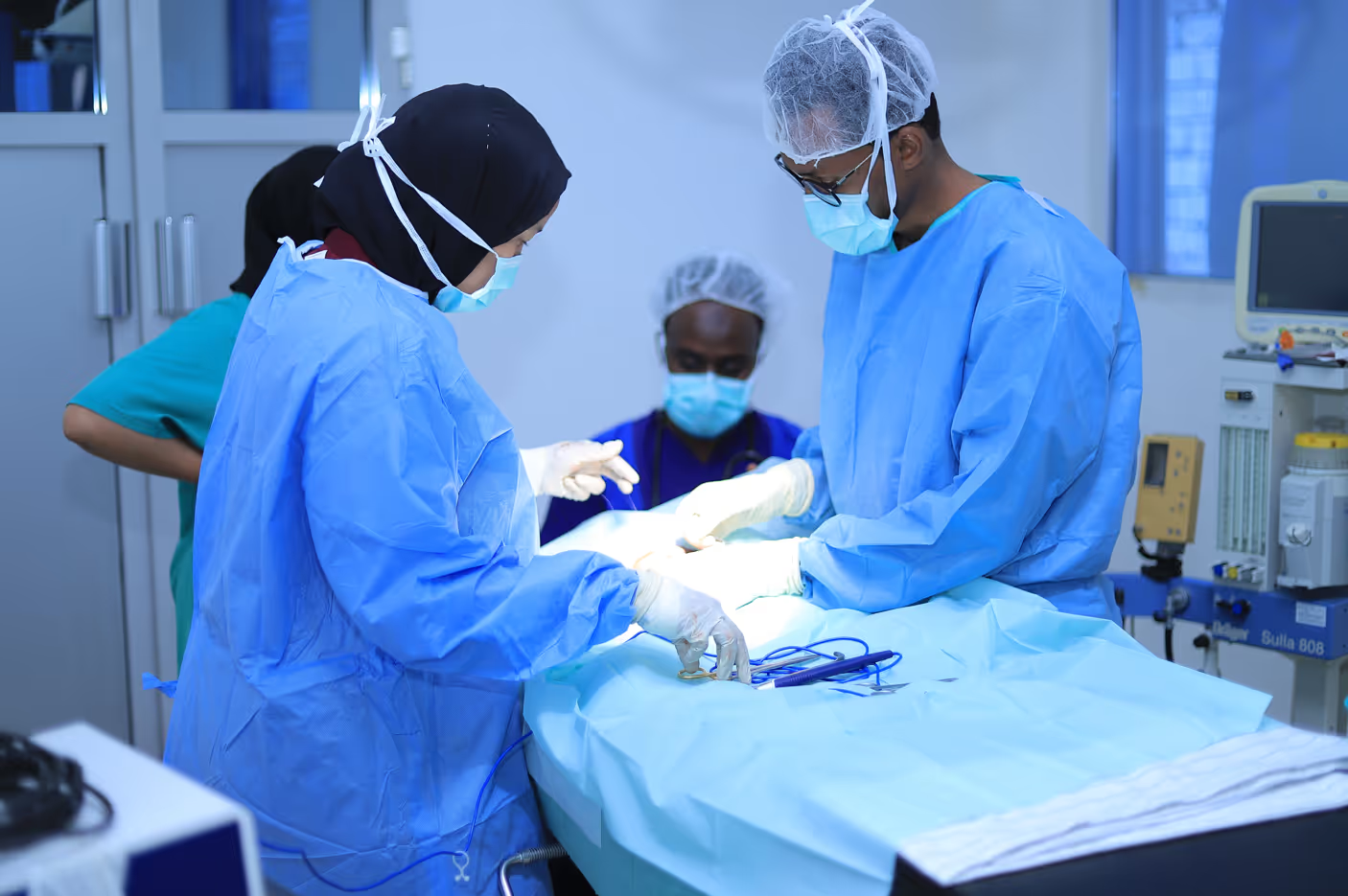
Evaluating the impact of the ECHOâ„¢ tele-health Model across five hospitals in Somaliland to support the surgical workforce and improve clinical outcomes of children living with burns and pyloric stenosis in this humanitarian context.
Countries
Somaliland
Organisations
The London School of Economics and Political Science
Partners
Somaliland Ministry of Health Development, Amoud University, MAS Children Teaching Hospital (ECHO-Hub), Gabiley Hospital, Borama Hospital, Berbera Hospital, Erigavo Hospital, Las Anod Hospital, Burco Hospital (ECHO-Spokes), Population Services International, Royal College of Surgeons of England
Area of funding
Humanitarian Research
Grant amount
£499,181.00
Start date
01
April
2023
End date
31
December
2024
Project length (in months)
Funding calls
Focus areas
No items found.
Topics
Health systems and services
Status
Closed
Project solution
This project offers [specific solution or intervention] to tackle [challenge]. By implementing [strategies, tools, or innovations], the project aims to achieve [desired outcomes]. The approach is designed to [specific actions or methods] to bring about meaningful change in [community, region, or issue area].
Expected outcomes
This project aims to achieve [specific outcomes], such as [measurable results, improvements, or changes]. The expected impact includes [benefits to the target community, advancements in research or innovation, or long-term effects]. By the end of the project, we anticipate [specific changes or milestones] that will contribute to [broader goals or objectives].
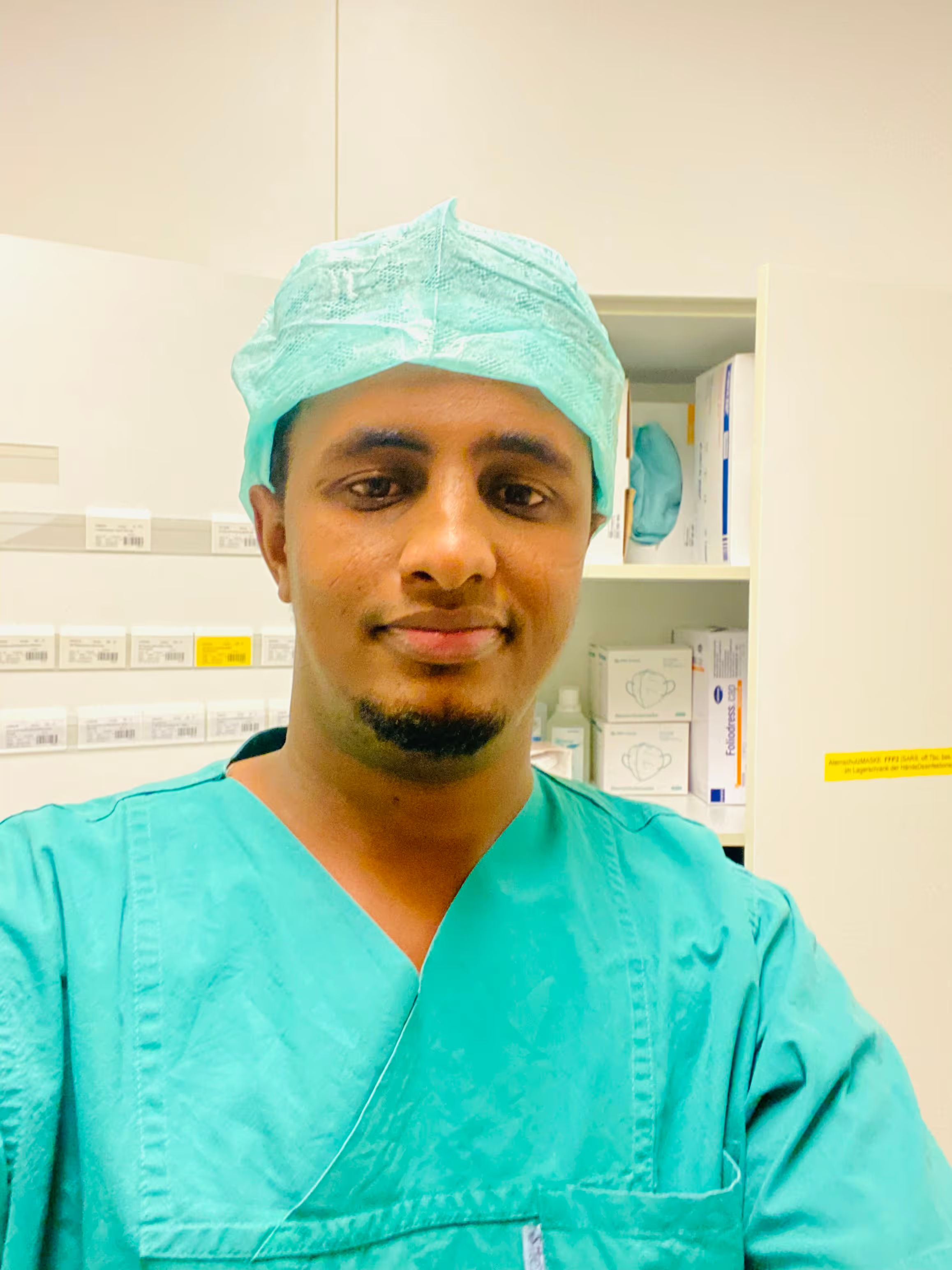
Dr Hassan Daoud
in-country coordinator
The major hospitals in Somaliland provide care for one out of every four children who need surgical intervention. Physicians, Trainees, and Practitioners currently operate with limited resources, guidelines, and supervisors. The SPACES-ECHO Project will have a direct impact on care providers, supporting their skills and confidence. Moreover, it will enhance the community's knowledge by encouraging families to recognize and refer children for treatment at the earliest possible stage. Community engagement will increase people's awareness of the most prevalent paediatric conditions (such as burns, pyloric stenosis, hydrocephalus, and other congenital anomalies).

Dr Mariam Dahir
in-country coordinator
Enhancing knowledge of pediatric surgery in Somaliland among healthcare workers participating in SPACES-ECHO is critical to improving surgical outcomes and ensuring the provision of high-quality care to children. This project has the potential to provide valuable insight into effective strategies for improving surgical care across our country.
Principal Investigator: Dr Rocco Friebel
Research Snapshot: Closing the knowledge gap in paediatric surgery in Somaliland
This implementation science project explored the impact of the Somaliland Paediatric Access and Clinical Excellence in Surgery - ‘Expanding Community Healthcare Outcomes’ (SPACESECHO) programme in Somaliland.
[.cta_link]Read the Snapshot[.cta_link]
What did the study set out to achieve?
Children in Somaliland face high rates of preventable illness and mortality due to limited access to safe paediatric surgical care. Given the shortage of specialists, children are often treated by general surgeons, general physicians and non-physician clinicians. Capacity of surgical providers is low, with limited opportunities for training of specialists. Enhancing specialist knowledge within the existing health workforce is a priority, and telemedicine can provide tailored learning opportunities.
A mixed-methods evaluation was conducted, to assess the value of the ECHO programme and the community outreach for healthcare professionals and children under 16 years old. This included tracking engagement with the training programme, surveys to assess knowledge gains and satisfaction, and focus groups to explore participation drivers and barriers. Clinical outcomes for children treated across seven hospitals were also collected.
What were the key findings?
- Twenty ECHO training sessions were delivered between December 2023 and September 2024, engaging 223 participants: predominantly male general physicians.
- Participants showed moderate knowledge gains, with greatest improvement (12%) in pre/peri-operative care, strong for a short virtual course.
- The programme was viewed as valuable, relevant, and feasible. Demand was driven by opportunities to build knowledge, share experiences, and collaborate with others.
- Although initial engagement was strong, attendance declined over time. Most participants attended between 2-5/20 sessions. Barriers to participation included workload and competing commitments, internet/platform challenges, and session timing.
- ECHO strengthened clinical capacity and knowledge. Participants reported that burn cases could be managed locally in district hospitals rather than being referred.
- The linked community outreach and support groups improved awareness, health seeking behaviours, household reach, and caregiver confidence.
What does this mean for policymakers and practitioners?
Tele-mentoring shows strong potential as an accessible approach for engaging medical professionals and building clinical capacity. Its wider implementation could be integrated into national continuing medical education frameworks, with policymakers formally recognising tele-mentoring as a valid mode of professional development linked to career progression incentives.
However, barriers to participation must be addressed. Policymakers should ensure training can be prioritised within workloads, with mandatory participation considered to support consistent engagement. To ensure sustainability and greater impact, programme leadership should gradually transition to Somaliland’s health institutions, strengthening local ownership and alignment with national health priorities. In the short term, partner funding and technical support would be needed to enable this transition.
Investment in digital infrastructure and skills is also essential. Connectivity remains limited in remote areas, and digital literacy varies among professionals. Until coverage improves, offline training options should be maintained alongside targeted digital literacy training. Finally, aligning community mobilisation with service delivery should continue, supporting health literacy and encouraging greater uptake of hospital services.
No items found.
Project delivery & updates
Stay up to date with the latest developments from this project. Here, you will find details on what has been delivered, resources created, and regular updates as the project progresses. Access key documents, reports, and other materials to see how the project is making an impact.
No resources/updates have been published yet for this project. Sign up for our newsletter to stay informed about upcoming publications and updates!
Join our Newsletter
Resources
Research Snapshot: Closing the knowledge gap in paediatric surgery in Somaliland
Research snapshot
LEARN MORELatest updates
No items found.