


Cluster-Randomized trial of the Implementation of the Responses to Illness Severity Quantification System (RISQ) in children with acute Malnutrition Six to Fifty-nine months of age in Ngouri, Chad (CRIMSON)
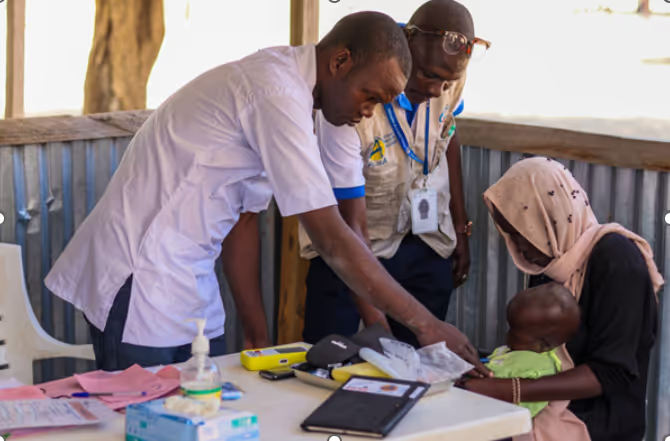

Project overview
A cluster randomised control trial comparing implementation of the RISQ System with usual care in an ALIMA-run nutrition treatment program.
Countries
Chad
Organisations
Alliance for International Medical Action (ALIMA)
Partners
Alerte Santé, The Department of Nutrition and Food Technology (DNTA) of the Ministry of Health Chad, The Hospital for Sick Children (SickKids)
Area of funding
Humanitarian Research
Grant amount
400,000
Start date
01
March
2023
End date
30
June
2026
Project length (in months)
Funding calls
Focus areas
Topics
Nutrition
Status
Closed
Project solution
This project offers [specific solution or intervention] to tackle [challenge]. By implementing [strategies, tools, or innovations], the project aims to achieve [desired outcomes]. The approach is designed to [specific actions or methods] to bring about meaningful change in [community, region, or issue area].
Expected outcomes
This project aims to achieve [specific outcomes], such as [measurable results, improvements, or changes]. The expected impact includes [benefits to the target community, advancements in research or innovation, or long-term effects]. By the end of the project, we anticipate [specific changes or milestones] that will contribute to [broader goals or objectives].
Dr Youssouf Djidita Hagre
University of N'djamena
In sub-Saharan Africa, malnutrition is a major factor in child mortality. The evaluation of children in a malnutrition situation is not always obvious, which means that many children die at home despite having been in a health facility. It is essential to have reliable tools to detect children in severe situations. The RISQ score will contribute to a better detection of these children.
Principal Investigators: Dr. Christopher Parshuram and Dr Youssouf Djitida Hagre
Research Snapshot: Identifying at-risk malnourished children saves lives
The Responses to Illness Severity Quantification (RISQ) System uses seven vital parameters to help healthcare workers quickly identify malnourished children who require immediate care. This study in Chad indicates that using RISQ reduced the risk of death by about 40%.
[.cta_link]Read the Snapshot[.cta_link]
What did the study set out to achieve?
In sub-Saharan Africa, malnutrition is a major factor in child mortality, despite existing clinical guidelines. The evaluation of children in a malnutrition situation is not always obvious, which means that many children die at home despite having been in a health facility. It is essential to have reliable systems to detect children in severe situations.
RISQ was piloted and tested over 26 months, in 34 health centres in Chad as part of the OptiMA nutrition program. 14559 children aged 6–59 months were randomly assigned to usual care (per WHO guidelines) or usual care plus RISQ. Mortality before program discharge or within 60 days, and hospitalisation rate, was captured then analysed using Bayesian statistics. Healthcare workers were surveyed to evaluate care processes, implementation fidelity, and acceptability.
What were the key findings?
Results showed a 40% reduction in mortality in the intervention arm, and 85% of healthcare workers found the RISQ System useful in daily practice.
- Reduced child deaths: Analysis showed a 96% probability of death being lower in children in the 60 days after entering the malnutrition program in health centres where the RISQ System was used. Of the program admissions, 35 out of 7497 children died (0.47%) in the RISQ group, compared to 59 of 7174 (0.82%) children in the control group.
- Reduced hospitalisation: Children cared for in health centres using RISQ were hospitalised 293 times (3.9%) compared with children cared for in health centres using usual care who were hospitalised 430 times (6%). Overall, there was a 95% probability of less frequent hospitalization with RISQ.
- Implementation: 51% of healthcare workers reported more workload, mainly due to extra monitoring and respiratory rate checks. However, 85% of healthcare workers believe RISQ could be useful in routine practice; 78% felt confident using RISQ after initial training.
What does this mean for policymakers and practitioners?
The findings are relevant to anyone involved with NGOs and public health systems providing outpatient care for children with acute malnutrition. The RISQ System, combined with a pulse oximeter, standardises vital sign checks- helping health workers identify severely ill children for urgent referral or hospital care. This supports timely decisions and may reduce preventable deaths and hospitalisation, alleviating burden on facilities.
RISQ uses simple, measurable signs and can be applied by trained staff in low-resource settings, making it a practical system to improve early detection and strengthen malnutrition care quality and safety. These strong results support the case for expanding implementation of RISQ. ALIMA is now leading the development of an app-based version of the system which it is piloting in similar settings.
These strong results support the case for expanding implementation of RISQ. ALIMA is now leading the development of an app-based version of the system which it is piloting in similar settings.
No items found.
Project delivery & updates
Stay up to date with the latest developments from this project. Here, you will find details on what has been delivered, resources created, and regular updates as the project progresses. Access key documents, reports, and other materials to see how the project is making an impact.
No resources/updates have been published yet for this project. Sign up for our newsletter to stay informed about upcoming publications and updates!
Join our Newsletter
Resources
Latest updates
No items found.