


Research Snapshot: Identifying at-risk malnourished children saves lives



In sub-Saharan Africa, malnutrition is a major factor in child mortality, despite existing clinical guidelines. The evaluation of children in a malnutrition situation is not always obvious, which means that many children die at home despite having been in a health facility. It is essential to have reliable systems to detect children in severe situations.
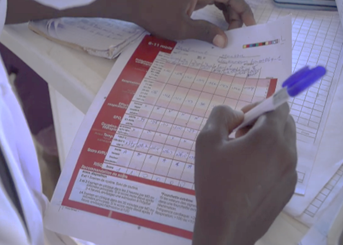
The Responses to Illness Severity Quantification (RISQ) system uses seven vital parameters to help healthcare workers quickly identify malnourished children who require immediate care.
RISQ was piloted and tested over 26 months, in 34 health centres in Chad as part of the OptiMA nutrition program. 14559 children aged 6–59 months were randomly assigned to usual care (per WHO guidelines) or usual care plus RISQ. Mortality before program discharge or within 60 days, and hospitalisation rate, was captured then analysed using Bayesian statistics. Healthcare workers were surveyed to evaluate care processes, implementation fidelity, and acceptability.
Malnourished children are not always easily evaluated and often die, even if they have been in a clinical setting. Systems are needed to help identify and prioritise the children who need most care. A cluster-randomised trial conducted in 34 health centers in Chad evaluated the impact of the Responses to Illness Severity Quantification (RISQ) System for guiding care in children with acute malnutrition. Results showed a 40% reduction in mortality in the intervention arm, and 85% of healthcare workers found the RISQ System useful in daily practice. These strong results support the case for expanding implementation of RISQ. ALIMA is now leading the development of an app-based version of the system which it is piloting in similar settings.
This snapshot contains key messages, findings, implications for humanitarian policymakers and practitioners and recommendations for further research.