


Nawat (seeds) sprouting

Project overview
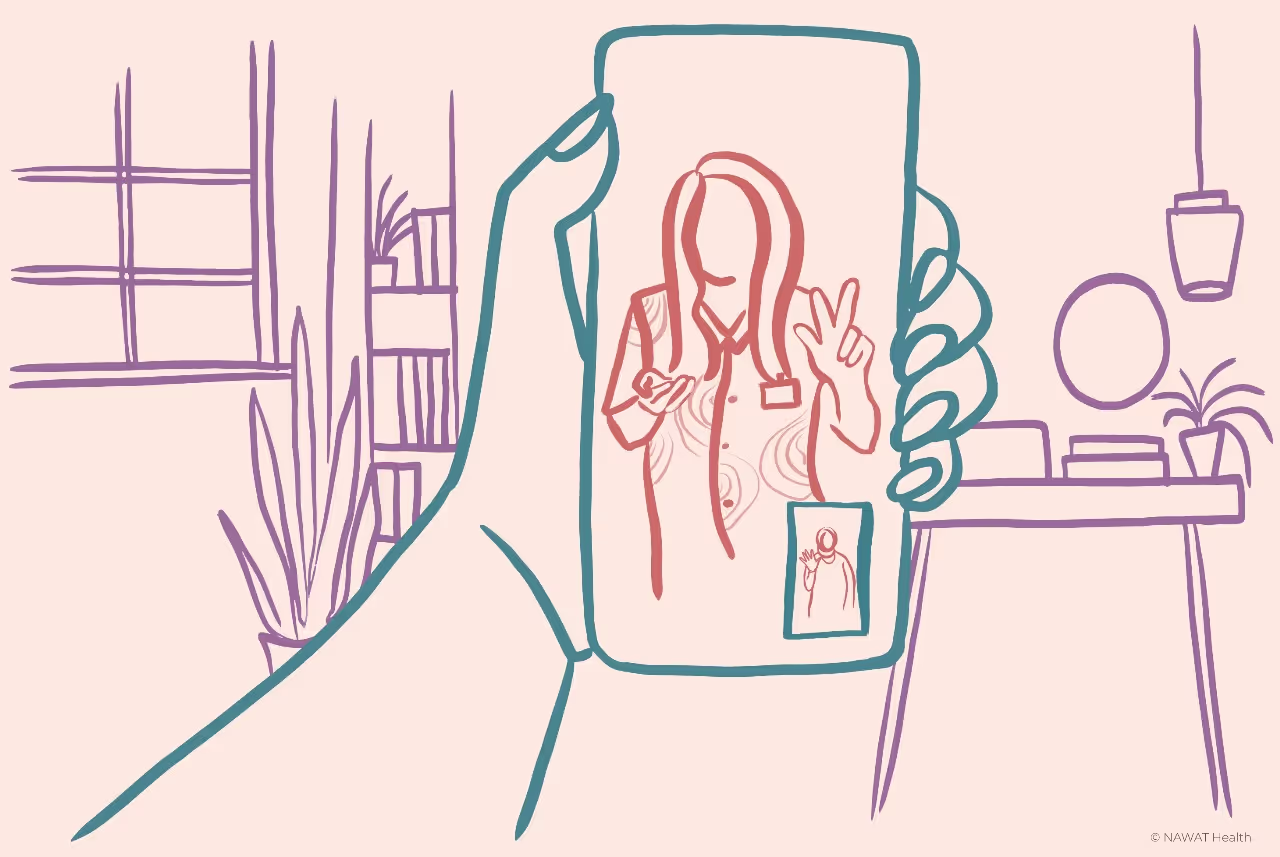
Oxfam and Nawat piloted the development of an app that allowed GBV service providers to deliver anonymous and safe online specialized GBV services (case management, legal, psychological) to GBV survivors with limited mobility or limited access to services.
Project solution
This project offers [specific solution or intervention] to tackle [challenge]. By implementing [strategies, tools, or innovations], the project aims to achieve [desired outcomes]. The approach is designed to [specific actions or methods] to bring about meaningful change in [community, region, or issue area].
Expected outcomes
This project aims to achieve [specific outcomes], such as [measurable results, improvements, or changes]. The expected impact includes [benefits to the target community, advancements in research or innovation, or long-term effects]. By the end of the project, we anticipate [specific changes or milestones] that will contribute to [broader goals or objectives].
WHAT HUMANITARIAN NEED WAS ADDRESSED?
GBV is pervasive across MENA, with around 40% of women experiencing intimate partner violence in their lifetime and an estimated 70% experience some form of GBV in humanitarian contexts. Yet survivors face stigma, insecurity, and restricted mobility, leaving them unable to access support when services are most disrupted. The project addressed this by creating Nawat, a safe Arabic-language app connecting survivors directly to caseworkers, psychologists, and lawyers. Through secure text, voice, or video consultations, the app provided confidential access to crisis intervention, legal advice, and psychosocial support, reaching women who would otherwise remain cut off from lifesaving services.
HOW DID THE INNOVATIVE SOLUTION IMPACT HUMANITARIAN PRACTISE?
The project demonstrated how digital platforms can safely expand access to GBV services in humanitarian settings. Through Nawat, survivors were able to choose and connect confidentially with caseworkers, psychologists, and lawyers via text, voice, or video. This offered a safer, more private alternative to hotlines and overcame barriers such as stigma, mobility restrictions, and insecurity.
For humanitarian actors, the app provided a new model of remote service delivery designed specifically for MENA contexts, with Arabic-language content, survivor-centred features, and built-in safety protocols. By integrating psychosocial support, legal advice, case management, and SRH services into one secure space, the platform improved continuity of care and allowed displaced and mobile women to access services they otherwise could not reach. Importantly, the app was co-designed with survivors and experts, ensuring relevance and uptake. This pilot shifted practice by proving that GBV services can be delivered digitally, safely, and effectively in crisis conditions
WHAT PROGRESS WAS ACHIEVED AND WHAT WERE THE KEY LEARNINGS?
The pilot reached 51 survivors across Palestine, Iraq, and Yemen, who accessed 108 sessions with experts through the app. Out of those who completed surveys, 92% reported safe, timely, and relevant services, and 88% felt empowered while using the platform. Three partner organisations, TAM, BWA, and FMF, delivered case management, psychosocial, and legal services and committed to continue using the app beyond the project.
Progress was achieved by building and testing a fully functional, Arabic-language platform co-designed with survivors and service providers. Key learnings include that three GBV partners improved their capacity to provide remote services, with experts strongly motivated to continue beyond the pilot. Continuous feedback loops between users and developers shaped rapid adaptations. The credit-based model piloted a cash-for-health approach, removing barriers to access. Strong onboarding and attention to digital literacy and connectivity challenges laid the groundwork for scale and broader uptake.
FUTURE POTENTIAL AND LESSONS FOR INNOVATION
The pilot demonstrated that digital platforms can safely and effectively expand GBV services in crisis contexts. Building on this, Nawat can evolve by refining features such as onboarding, accessibility, and discreet communication options, and by integrating sexual and reproductive health services to strengthen links between SRHR and protection. The model has strong potential to scale across MENA and other humanitarian settings where women face stigma, insecurity, or mobility restrictions.
Lessons from the pilot highlight the value of survivor-centred design, co-creation with local partners, and iterative feedback loops to ensure usability and trust. They also show the importance of addressing barriers such as connectivity, digital literacy, and expert workload early in the design process. Future collaboration opportunities include partnerships with humanitarian agencies, women’s rights organisations, and donors to broaden reach, improve features, and expand services. With investment, Nawat could become a regional model for survivor-centred digital care.
Project delivery & updates
Stay up to date with the latest developments from this project. Here, you will find details on what has been delivered, resources created, and regular updates as the project progresses. Access key documents, reports, and other materials to see how the project is making an impact.