


Visual media as a tool for promoting informed consent in research


Faites défiler vers le bas pour voir la version française
Picture yourself in this moment: an infectious disease outbreak is ravaging your community. Ebola has already claimed people you love. A stranger approaches and invites you to join a research study, handing you paperwork which, they tell you, contains more information to help you understand this research and decide if you want to become a “study participant”. They tell you that this research will help your community, but you cannot read the words on the pages you’re given. They mean nothing to you. You turn to your community leader for guidance, but while they know the study exists, they do not have much more information than you. What runs through your mind in this moment? What would you need to understand before deciding whether or not to support and participate in this study?
The spark: When a training session becomes a film
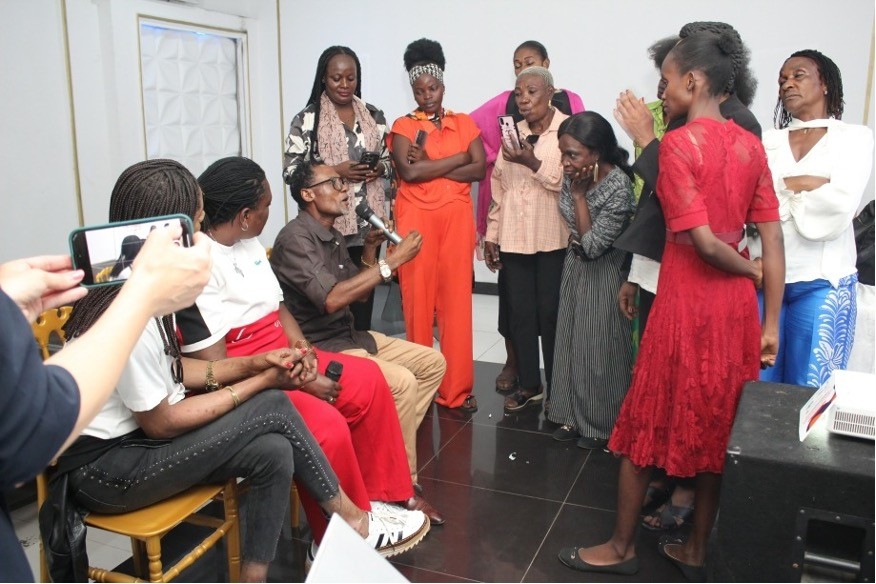
In 2025, Elrha awarded a grant to three researchers and Kinshasa-based community leader Cesar Mombunza (sp), to organize Train-the-Trainer workshops on use of the Participants’ Research Ethics Toolbox. Designed in the aftermath of the West Africa Ebola outbreak in a collaboration between Ebola-affected community groups and researchers, this Toolbox and its associated workshop aim to provide communities with an opportunity to learn about, discuss, and practice asserting core health research participants’ rights as per international guidelines (https://cioms.ch/).
What started as training sessions on the Participant Research Ethics Toolkit (PRET) with 40 community leaders in Kinshasa in 2025 quickly grew into something larger. As Cesar Mombunza, the key community partner and national coordinator of the Congolese Network of Religious Leaders Living with HIV or AIDS or Personally Affected by these Diseases (CONERELA+) – an organization working to reduce stigma and discrimination and promote community-centered health responses – recounts, participants eager to offer these workshops in their own communities suggested that providing more information about the clinical trials of the Mpox vaccine would help address the widespread skepticism surrounding these trials. One recurring misconception stood out: the belief that vaccines are developed too hastily. The group took action to provide answers to these questions and help communities better understand the importance of clinical trials, and how developing vaccines and treatments depends on research. Following discussions with Elrha, post-workshop, and in collaboration with Dr. Élysée Nouvet (Western University), CONERELA+ and its members produced a 12 min short film: “Why do we need MPOX trials?"
The film, produced in both English and French, features local actors and workshop participants in the roles of researchers, a chief, and community members. Themes include that advances in technology can accelerate development timelines without sacrificing scientific rigor, and respectful community consultation processes.
What the community really wants to know
When researchers arrive in a community, they bring their own questions. But the community has its own. And these two sets of concerns don’t always align.
The questions communities ask are practical and legitimate: Does this research address our everyday problems? What risks will we face? Who will take responsibility for these risks if something goes wrong? And above all: will our personal information be protected?
Why educating communities about their rights changes everything
High illiteracy rates, limited access to formal education, and a lack of awareness of rights, even among community leaders, are challenges that need to be addressed in any research involving human participants, as informed consent is a key moment. In theory, it ensures that everyone understands what they’re agreeing to. In practice, it’s often rushed through in a few minutes: a brief explanation, a form to sign, and the process is over.
When participants lack time to ask questions or speak with researchers, they may not fully grasp the information, a document signed without real understanding offers no protection. It shifts responsibility to the participant while leaving them in the dark.
When communities who are being approached for participation in research during public health emergencies know their rights, this profoundly transforms the dynamic. Those invited to join a study can better understand, ask questions, get involved, and, most importantly, make informed voluntary decisions on whether or not they want to consent to participation.
What’s next?
CONERELA+ has completed its film addition to the Participants’ Research Toolbox, but the work is just beginning. CONERELA+ has embarked on an ambitious, multi-pronged strategy inspired by its experience.
First on the agenda: establishing a partnership with the DRC’s National Ethics Committee to anchor the initiative within institutional frameworks and strengthen its legitimacy.
Next, identifying endemic areas where clinical trials are common. These regions will be prioritized for training programs, in collaboration with partners.
Finally, an innovative outreach strategy: community market radio stations. In many regions, markets are central hubs where radio accompanies daily activities. Broadcasting programs on participants’ rights in these spaces will allow CONERELA+ to reach people directly, where they live and work.
About the project
The Participant Research Ethics Toolkit (PRET) is a set of open-access resources designed to promote reflection and discussion on clinical research processes and the rights of research participants. It was developed in collaboration with low-literacy adults in Ebola-affected communities in sub-Saharan Africa following the 2014–2016 outbreak, when community members expressed a need for better tools to help them understand and navigate invitations to participate in research.
Daniel Brisebois is an independent researcher with expertise in fostering intercultural understanding and community mobilization.
César Azuba Mombunza is a prominent member of the Congolese Network of Religious Leaders Living with HIV or AIDS or Personally Affected by these Diseases (CONERELA+), an organization working to reduce stigma and discrimination and promote community-centered health responses.
------------------------------------------------------------------------------------------------------------------
Les médias visuels comme outil de promotion du consentement éclairé dans la recherche
Imaginez-vous dans cette situation : une épidémie de maladie infectieuse ravage votre communauté. Le virus Ébola a déjà emporté des êtres chers. Un inconnu s'approche de vous et vous invite à participer à une étude de recherche, en vous remettant des documents qui, selon lui, contiennent davantage d'informations pour vous aider à comprendre cette recherche et à décider si vous souhaitez devenir un « participant à l'étude ». Il vous dit que cette recherche aidera votre communauté, mais vous ne comprenez pas les mots écrits sur les pages qu’on vous a remises. Ils ne signifient rien pour vous. Vous vous tournez vers le chef de votre communauté pour obtenir des conseils, mais bien qu’il sache que l’étude existe, il n’en sait pas beaucoup plus que vous. Quelles pensées vous traversent l’esprit à ce moment-là ? De quoi auriez-vous besoin pour comprendre avant de décider de soutenir ou non cette étude et d’y participer ?
L'étincelle : quand une session de formation devient un film
En 2025, Elrha a accordé une subvention à trois chercheurs et au responsable communautaire basé à Kinshasa, César Mombunza (sp), pour organiser des ateliers de formation des formateurs sur l’utilisation de la Boîte à outils sur l’éthique de la recherche pour les participants. Conçue au lendemain de l’épidémie d’Ebola en Afrique de l’Ouest, en collaboration entre des groupes communautaires touchés par Ébola et des chercheurs, cette boîte à outils et l’atelier qui y est associé visent à offrir aux communautés l’occasion de s’informer, de discuter et de s’exercer à faire valoir les droits fondamentaux des participants à la recherche en santé, conformément aux directives internationales (https://cioms.ch/).
Ce qui a commencé par des sessions de formation sur la Boîte à outils sur l’éthique de la recherche pour les participants (PRET) avec 40 leaders communautaires à Kinshasa en 2025 s’est rapidement transformé en un projet de plus grande envergure. Comme le raconte César Mombunza, partenaire communautaire clé et coordinateur national du Réseau congolais des responsables religieux vivant avec le VIH ou le sida ou personnellement touchés par ces maladies (CONERELA+) — une organisation œuvrant pour réduire la stigmatisation et la discrimination et promouvoir des réponses sanitaires centrées sur la communauté —, les participants, désireux d’organiser ces ateliers dans leurs propres communautés, ont suggéré que fournir davantage d’informations sur les essais cliniques du vaccin contre la variole du singe aiderait à répondre au scepticisme généralisé entourant ces essais. Une idée fausse récurrente ressortait particulièrement : la conviction que les vaccins sont développés trop précipitamment. Le groupe a pris des mesures pour apporter des réponses à ces questions et aider les communautés à mieux comprendre l’importance des essais cliniques, ainsi que la manière dont le développement des vaccins et des traitements dépend de la recherche. À la suite de discussions avec Elrha, après l’atelier, et en collaboration avec le Dr Élysée Nouvet (Université Western), CONERELA+ et ses membres ont produit un court métrage de 12 minutes : « Pourquoi avons-nous besoin d’essais sur la variole du singe ? »
Ce film, réalisé en anglais et en français, met en scène des acteurs locaux et des participants aux ateliers dans les rôles de chercheurs, d’un chef et de membres de la communauté. Il aborde notamment le fait que les progrès technologiques peuvent accélérer les délais de développement sans pour autant sacrifier la rigueur scientifique, ainsi que l’importance de processus de consultation respectueux de la communauté.
Ce que la communauté souhaite vraiment savoir
Lorsque les chercheurs arrivent dans une communauté, ils apportent leurs propres questions. Mais la communauté a les siennes. Et ces deux séries de préoccupations ne coïncident pas toujours.
Les questions que posent les communautés sont pratiques et légitimes : cette recherche répond-elle à nos problèmes quotidiens ? À quels risques allons-nous être confrontés ? Qui assumera la responsabilité de ces risques si quelque chose tourne mal ? Et surtout : nos informations personnelles seront-elles protégées ?
Pourquoi informer les communautés de leurs droits change tout
Les taux élevés d’analphabétisme, l’accès limité à l’éducation formelle et la méconnaissance des droits, même parmi les responsables communautaires, constituent des défis qu’il convient de relever dans toute recherche impliquant des participants humains, le consentement éclairé étant un moment crucial. En théorie, il garantit que chacun comprend ce à quoi il consent. Dans la pratique, cette étape est souvent expédiée en quelques minutes : une brève explication, un formulaire à signer, et le tour est joué.
Lorsque les participants n'ont pas le temps de poser des questions ou de s'entretenir avec les chercheurs, ils risquent de ne pas saisir pleinement les informations, et un document signé sans véritable compréhension n'offre aucune protection. Cela transfère la responsabilité au participant tout en le laissant dans l'ignorance.
Lorsque les communautés sollicitées pour participer à des recherches lors de situations d’urgence de santé publique connaissent leurs droits, cela transforme profondément la dynamique. Les personnes invitées à participer à une étude peuvent mieux comprendre, poser des questions, s’impliquer et, surtout, prendre des décisions éclairées et volontaires quant à leur consentement à participer.
Quelle est la prochaine étape ?
CONERELA+ a achevé l’ajout de son film à la Boîte à outils de recherche des participants, mais le travail ne fait que commencer. CONERELA+ s’est lancé dans une stratégie ambitieuse et multiforme inspirée de son expérience.
Première priorité : établir un partenariat avec le Comité national d’éthique de la RDC afin d’ancrer l’initiative dans les cadres institutionnels et de renforcer sa légitimité.
Ensuite, identifier les zones endémiques où les essais cliniques sont courants. Ces régions seront prioritaires pour les programmes de formation, en collaboration avec des partenaires.
Enfin, une stratégie de sensibilisation innovante : les stations de radio des marchés communautaires. Dans de nombreuses régions, les marchés sont des lieux centraux où la radio accompagne les activités quotidiennes. Diffuser des programmes sur les droits des participants dans ces espaces permettra à CONERELA+ d’atteindre directement les personnes, là où elles vivent et travaillent.
À propos du projet
La boîte à outils sur l'éthique de la recherche avec les participants (PRET) est un ensemble de ressources en libre accès conçu pour favoriser la réflexion et la discussion sur les processus de recherche clinique et les droits des participants à la recherche. Elle a été développée en collaboration avec des adultes peu alphabétisés issus de communautés touchées par Ebola en Afrique subsaharienne à la suite de l'épidémie de 2014-2016, lorsque les membres de ces communautés ont exprimé le besoin de disposer de meilleurs outils pour les aider à comprendre et à gérer les invitations à participer à la recherche.
Daniel Brisebois est un chercheur indépendant spécialisé dans la promotion de la compréhension interculturelle et la mobilisation communautaire.
César Azuba Mombunza est un membre éminent du Réseau congolais des responsables religieux vivant avec le VIH ou le sida ou personnellement touchés par ces maladies (CONERELA+), une organisation qui œuvre à réduire la stigmatisation et la discrimination et à promouvoir des réponses sanitaires centrées sur la communauté.
Stay updated
Sign up for our newsletter to receive regular updates on resources, news, and insights like this. Don’t miss out on important information that can help you stay informed and engaged.



Explore Elrha
Learn more about our mission, the organisations we support, and the resources we provide to drive research and innovation in humanitarian response.