


Communities are filling critical gaps in NCD care in crises. Why does support still lag behind?
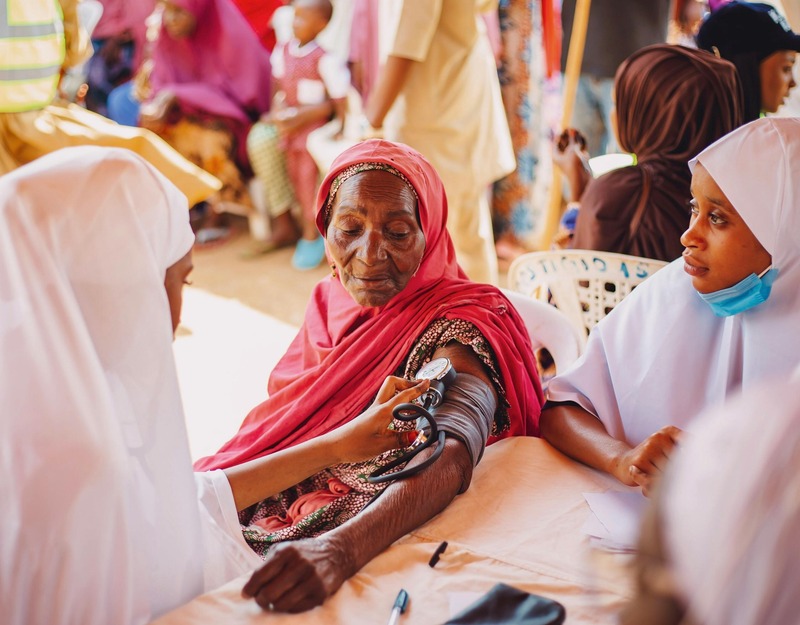


Non-communicable diseases (NCDs) are responsible for 74% of deaths worldwide, with more than three-quarters of NCD deaths occurring in low- and middle-income countries, where many humanitarian crises are currently unfolding. In an increasingly constrained and competitive funding environment, humanitarian organisations are being forced to make difficult decisions about priorities, and NCD care is frequently losing out.
There is a persistent mismatch between the structure of rapid, time-limited humanitarian responses designed to address acute needs at a particular point in a crisis, and the continuity of care required for people living with NCDs: NCDs require screening and treatment, sustained follow-up, reliable access to medication and long-term support for self-management and behaviour change. Diabetes does not resolve when a camp is decommissioned, and kidney and cardiovascular disease cannot be managed within a 12-month grant cycle. This mismatch is becoming increasingly significant as NCDs continue to rise globally.
Community actors are nevertheless developing and adapting responses. Established trust, acceptance and continuity through different phases of a crisis often place them in a strong position to design sustainable approaches around community-driven needs and to creatively adjust solutions as conditions change.
What does community-led innovation look like in practice?
When war broke out in Sudan in 2023, children with diabetes faced severe risks within an already fragile health system. The Sudan Childhood Diabetes Association (SCDA) responded in three core ways: co-designing crisis-specific education materials with families for periods of limited food or insulin; rapidly retraining displaced health workers to re-establish diabetes clinics; and coordinating with the Federal Ministry of Health, National Medical Supplies Fund, WHO Sudan and external actors such as Life for a Child and Direct Relief using a digitally enabled system to turn fragmented donations into a closed-loop supply chain rather than a parallel humanitarian service.
Dr. Salwa Musa, Lead of Paediatric Diabetes Clinics at SCDA reflects on this:
“During the Sudan war, we did not have the luxury of waiting for a perfect system or new solutions. We learned that innovation does not always mean creating something new; it can mean listening continuously to community needs, understanding what is changing on the ground, connecting the people and resources that already exist, and adapting quickly as needs change. For me, this is the strength of community-led innovation: solutions grow from real needs and lived experience, and become stronger when local knowledge is supported by sustained national and international partnerships.”
Three years into the conflict, the model has sustained continuity of care for more than 7,200 children, opened ten new facilities at the height of conflict, and trained more than 500 health workers.
Promising solutions are emerging, but the enabling system is lagging
SCDA is one of several community-led solutions identified through Elrha’s recent mapping work with the African Population and Health Research Center, supported by the Novo Nordisk Foundation. An accompanying policy brief examines this wider landscape and the conditions needed to strengthen and scale promising approaches. SCDA’s experience demonstrates how community actors are developing practical responses to the challenges while operating within financing and support systems that were not designed around their solutions. However, many similar solutions remain at an early stage – still being tested, refined, and evidenced.
This creates a significant and paradoxical structural constraint. Actors closest to the delivery of NCD care are often best placed to develop contextually appropriate and sustainable models yet frequently have limited access to the systems intended to finance and support innovation. Their approaches are not consistently identified or documented, and many lack structured support to generate evidence and develop pathways to scale what they have built – in their contexts or more broadly. Opportunities to exchange knowledge with each other and learn from comparable initiatives and address shared operational challenges also remain limited.
The financing pot for community-driven innovation is not only small but also fragmented across short funding cycles. The 5th Multistakeholder Gathering on the sidelines of the UN general assembly – exploring how philanthropic and private funding can better align with national priorities, and reduce fragmented funding – is a welcome step to support sustainability of NCD funding.
Beyond fragmentation, there is also a broader pattern of limited attention to financing NCDs in humanitarian settings. Whilst the preliminary agenda for the Sustainable Dialogue on Financing for NCDs did not address this challenge, it is something that should be considered ahead of the meeting in February 2027.
Efforts to make NCD financing more sustainable and equitable will remain incomplete unless actors delivering care in crisis-affected settings are meaningfully included in decisions about how resources are prioritised, designed and allocated.
Three shifts to build an enabling system
Addressing this challenge requires coordinated action in three areas: how financing reaches community actors, how accessible and flexible that financing is, and what forms of technical support accompany it.
1. Expand the mechanisms through which resources can reach community-based actors directly or through appropriate intermediaries.
Organisations, including Panorama Global, Direct Relief, and Life for a Child, are already supporting community actors, demonstrating that such arrangements are feasible. Models such as the Type 1 Diabetes Community Fund hosted by Panorama Global offer relevant learning on how catalytic funding for community actors combined with tailored capacity strengthening efforts can accelerate action towards sustainable impact. Elsewhere, actors such as Direct Relief highlight how the right resources directed towards those closest to the crisis at the right time can maintain essential continuity of NCD care in crises.
Donors and policymakers should build on this by exploring pooled public-private financing mechanisms that distribute risk across multiple actors, direct resources towards national actors and provide greater continuity as wider humanitarian funding contracts.
2. Money that reaches community actors still carries too much friction.
Community actors with limited size and capacity are often expected to meet application, compliance and reporting requirements designed for much larger institutions. Accountability remains essential, but unnecessarily complex processes which don't recognise this can exclude organisations with strong operational knowledge and established community relationships.
3. Investment is needed in the muscle of innovation and evidence generation itself.
This includes training and South-South peer leaning and utilising participatory innovation co-design approaches which support the development of contextualised solutions and local ownership. These functions should be treated as part of preparedness and resilient service delivery, rather than as additional activities introduced only after core response functions have been funded.
Conclusion
Community-based actors are already playing an important role in sustaining NCD care during crises, including in settings where larger humanitarian organisations face significant operational constraints. However, to continue sustainably, these actors need capacity strengthening, adequate financing and strategic partnerships to build evidence on these models, strengthen those that demonstrate impact and enable effective approaches to scale.
We are working to address part of this gap, developing a small community of practice around research and innovation for community-driven NCD solutions in crises. It will support a cohort of community actors to strengthen their research and innovation capacity, exchange practical learning and work through shared challenges involved in generating evidence and developing pathways to scale.
As difficult funding choices intensify, the humanitarian sector should place greater trust, resources and decision-making power in the community actors already demonstrating what works. To do this, we must invest in the capacity and support they need to sustain and scale their impact.
Stay updated
Sign up for our newsletter to receive regular updates on resources, news, and insights like this. Don’t miss out on important information that can help you stay informed and engaged.

Related articles



Explore Elrha
Learn more about our mission, the organisations we support, and the resources we provide to drive research and innovation in humanitarian response.