


Research Snapshot: Increasing access to handwashing facilities in crisis-affected populations


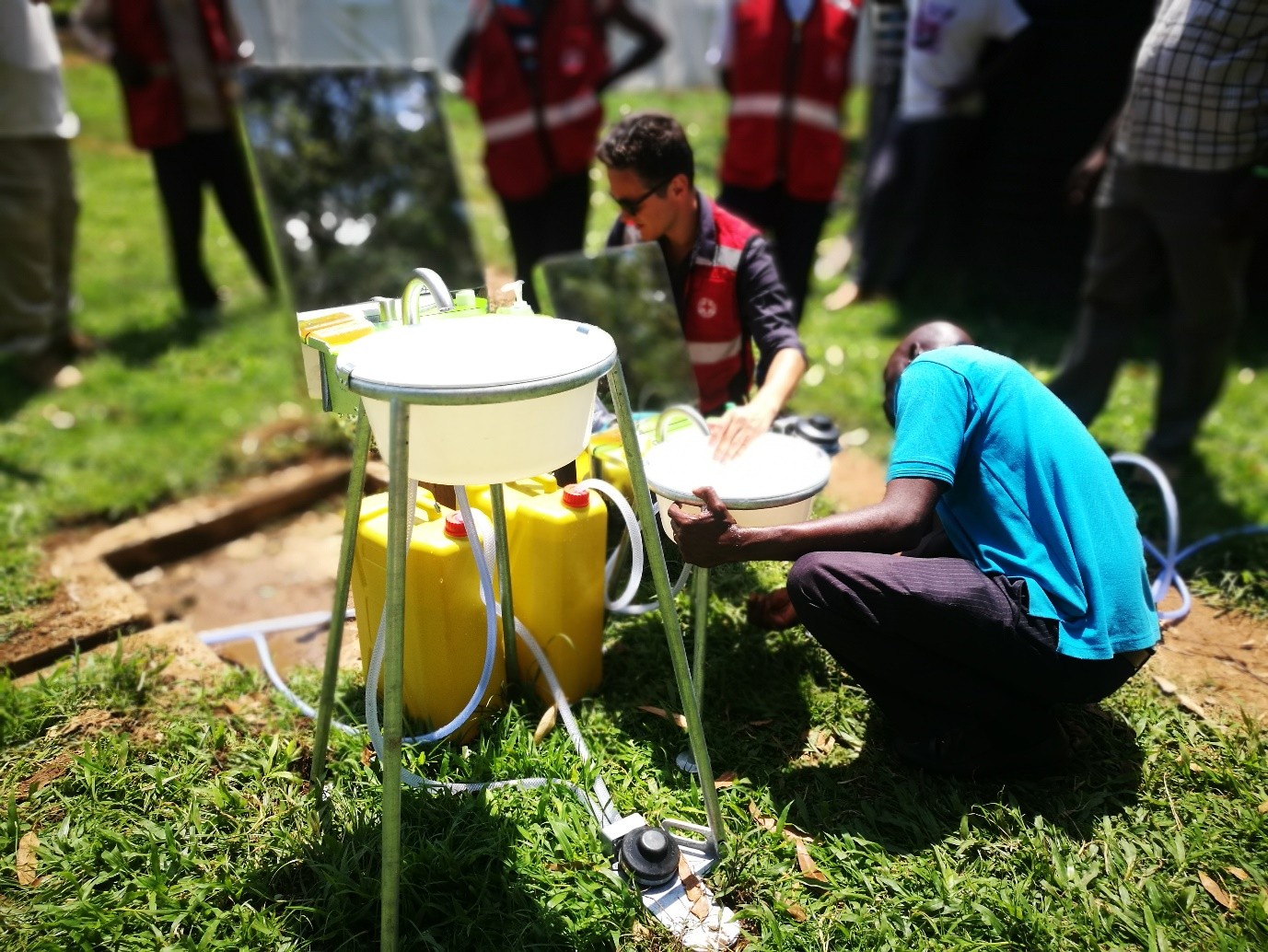

Crisis-affected populations experience higher morbidity and mortality from diarrheal, respiratory and other outbreak-prone diseases. Improved hygiene practices, such as handwashing with soap, substantially reduce such risks. Handwashing facilities are not always desirable, durable, or deployable in humanitarian settings. The Jengu handwashing unit was created to address these limitations, making handwashing with soap desirable, convenient and habitually performed. Little evidence existed on appropriate handwashing solutions, or on the impact of these on handwashing behaviour over time.
This study sought to understand the effect of the provision of soap and the Jengu handwashing facility on hand washing with soap among crisis-affected populations in Dadaab Refugee Camp, Kenya and Kyangwali Refugee Settlement, Uganda.
Novel handwashing facilities (Jengu units) integrating emotional motivators (a mirror, attractive features, scented soap) show promise as an acceptable, desirable intervention for crisis-affected populations. With appropriate adaptations for local production and distribution to improve durability, the Jengu units can be a solution for handwashing with soap in humanitarian settings. Additional behaviour change messaging may be needed to ensure handwashing with soap is prioritised over water alone.
This snapshot contains key messages, findings, implications for humanitarian policymakers and practitioners and recommendations for further research.