


Missing the mark? People in eastern DRC need information on Ebola in a language they understand


Output type
Case study
Location
Democratic Republic of Congo
Focus areas
Scaling innovation
Topics
Ebola
Programme
Humanitarian Innovation
Organisations
Translators without Borders
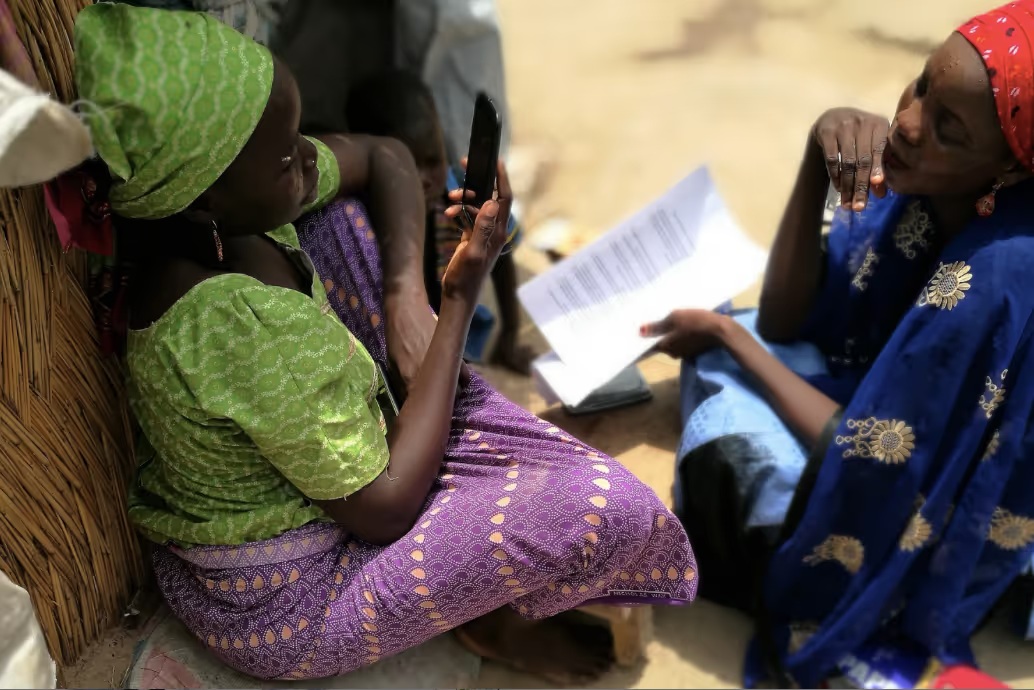

People at risk of contracting Ebola need information to keep themselves and their families safe. Information they don’t understand will not help them. They need clear communication in plain, localised language, in a format they understand, and through channels they trust.
Localised communication materials developed as part of a unified risk communication and community engagement strategy endeavor to provide that information. To support these efforts, in February 2019 Translators without Borders (TWB) surveyed residents in Goma, North Kivu Province, on their language and information needs in the Ebola response.
No items found.
Attachments
Other resources
explore all resources
Integrating community health volunteers into non-communicable disease management among Syrian refugees in Jordan: a causal loop analysis
Updated Evidence Review
The limits to rapid response: Ebola and structural violence in West Africa