


Humanitarian Archive Emergency: Landscape report and ethical triage


UKHIH Publication
Key Aid Consulting & the Institute of Development Studies
25
October
2026
Output type
Report
Location
Jordan
Senegal
Colombia
Thailand
Kenya
Focus areas
No items found.
Topics
Humanitarian archives
Programme
Organisations
University of Manchester
The humanitarian sector is at risk of losing its memory
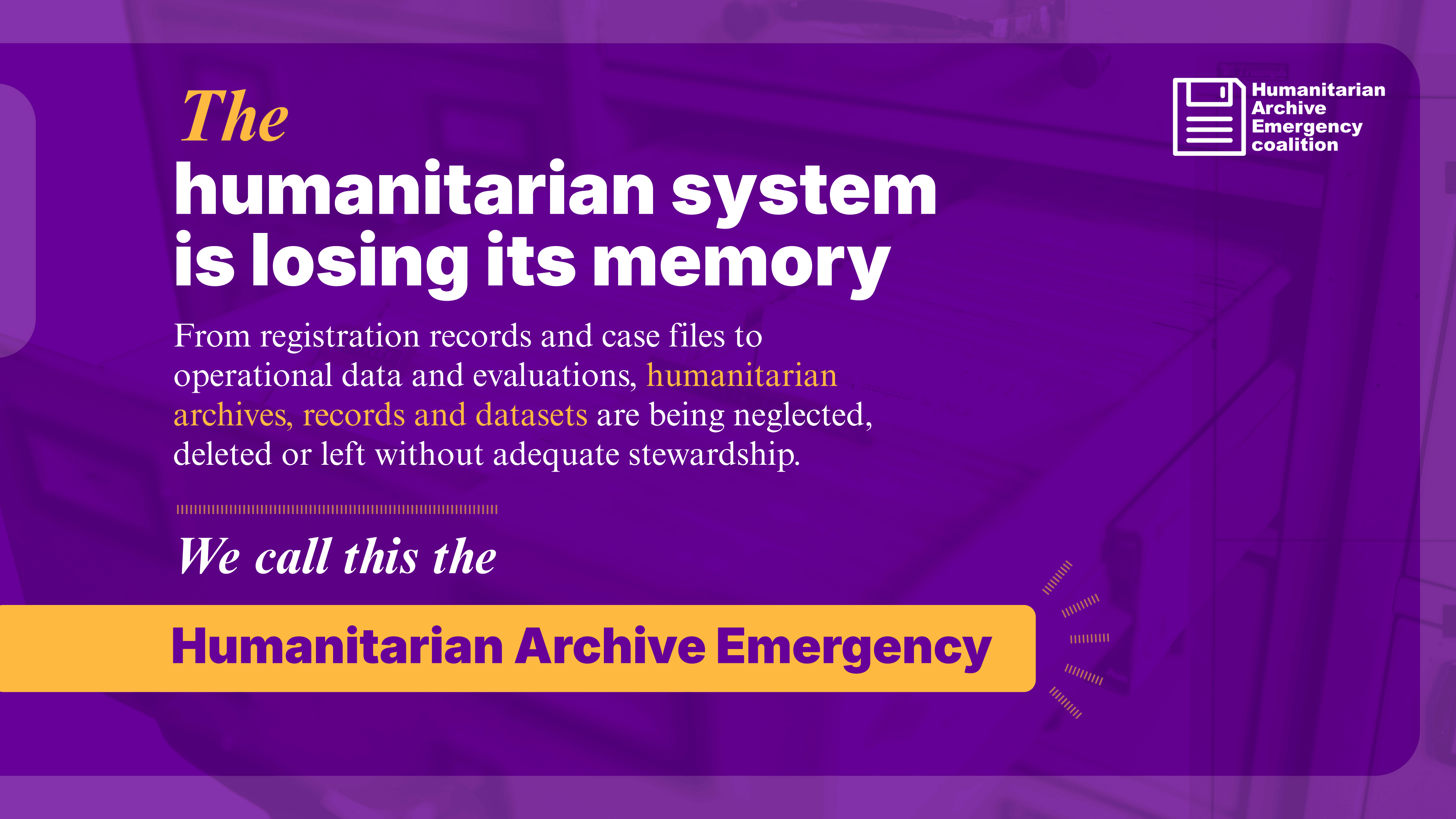
Humanitarian organisations create vast amounts of information, from registration records and case files to operational data, evaluations and research. But much of this material is being neglected, deleted or left without adequate protection.
The Humanitarian Archive Emergency (HAE) landscape report and ethical triage framework, produced by the HAE coalition, Key Aid Consulting and the Institute of Development Studies, examines the scale of the threat, which collections are most at risk and what the humanitarian sector can do about it.
Why preserving humanitarian records matters
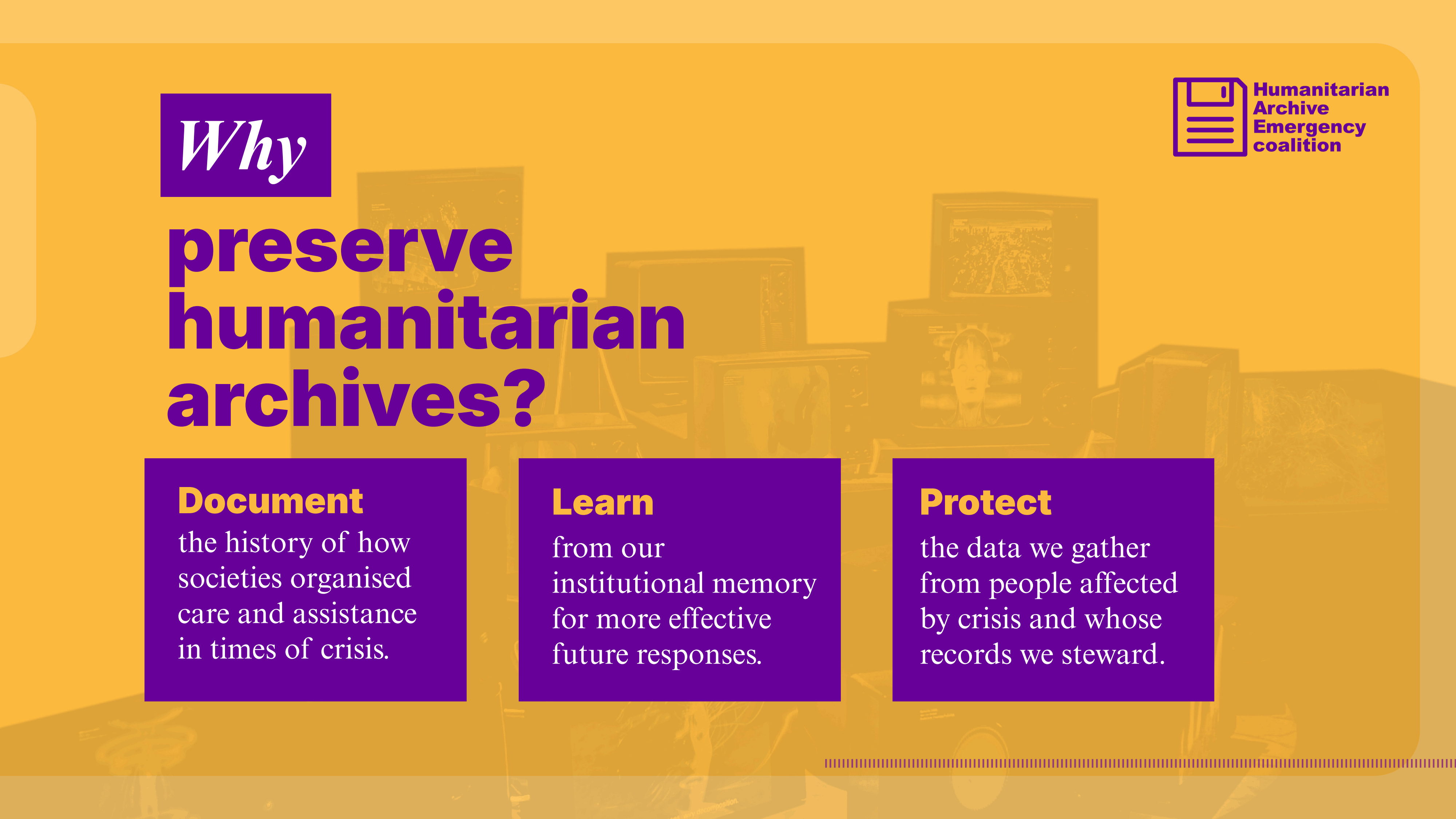
Archives are more than a record of humanitarian organisations and their work. They document how people and communities have experienced crises, and how humanitarian responses have evolved.
Protecting them matters for three interconnected reasons:
- History: they preserve a record of humanitarian action and how societies have organised care and assistance during crises.
- Learning and accountability: they provide the institutional memory needed to learn from previous responses, understand decisions and improve future action.
- People’s rights: records about crisis-affected people can be important to recognition, justice and accountability. Decisions about what survives therefore have consequences for the people whose lives and experiences are documented.
What is putting humanitarian archives at risk?
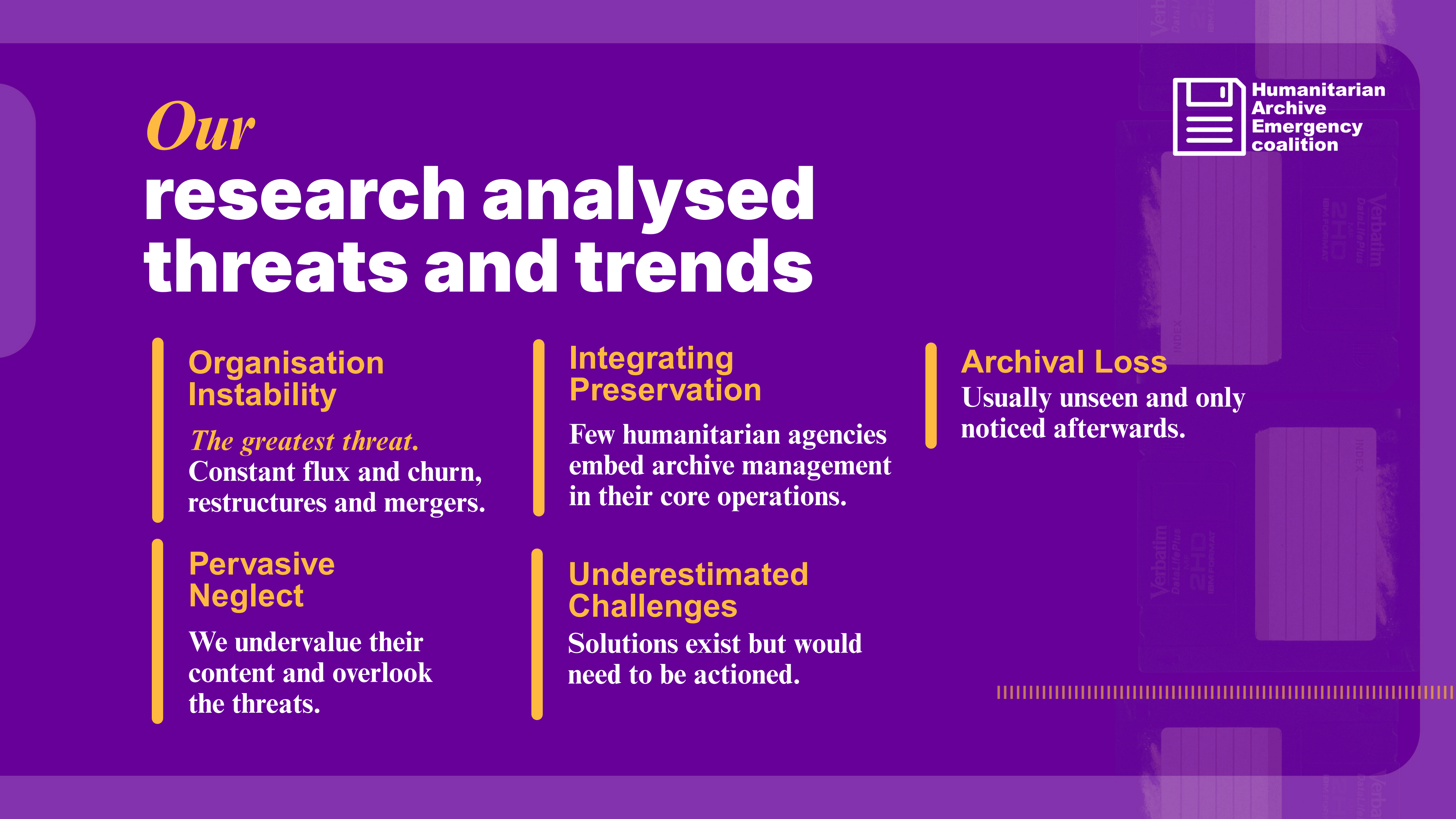
Drawing on a desk review, surveys of humanitarian collections, expert interviews and regional consultations in Amman, Dakar, Bogotá, Bangkok and Nairobi, the research highlights five major challenges:
- Organisational instability is the greatest threat to humanitarian archives. Records are frequently lost when organisations restructure, downsize, merge, or cease operations.
- Neglect is pervasive and cuts across all risk categories. Preservation is often treated as a secondary concern, amplifying every other threat.
- Most archival loss is invisible. Records commonly disappear without notice and are only discovered to be missing when they are needed.
- Digital preservation challenges are underestimated. Complex digital formats, decentralised storage, weak governance, and technological obsolescence create longterm risks that are often poorly understood. Solutions exist that can be deployed.
- Archiving is not yet embedded within humanitarian practice. Despite growing dependence on data, preservation is rarely treated as a core operational responsibility, and specialist archival expertise is often reduced rather than strengthened.
There is good practice to build on. Organisations including UNHCR and the ICRC have established professional records and archive services, demonstrating that effective preservation is possible in humanitarian settings. But these approaches are not yet widespread, and funding cuts are putting even established services under pressure.
Where is action most urgently needed?
The research suggests that risk can easily be underestimated. Records do not always disappear through a single catastrophic event. Often, collections deteriorate gradually, creating opportunities to intervene before they are lost.
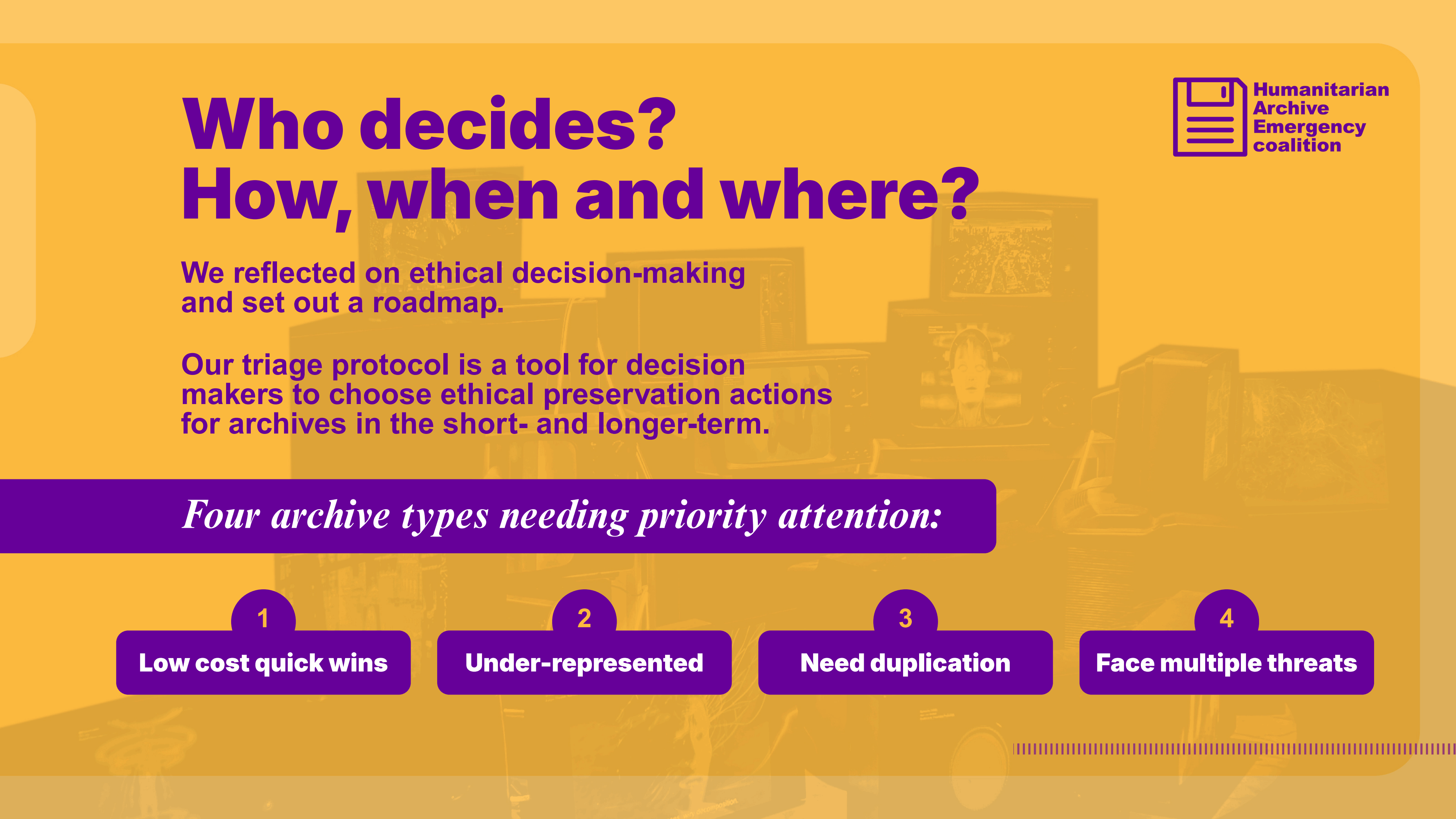
The report identifies four priorities for action:
- collections where intervention is feasible and could make a significant difference
- records documenting underrepresented communities and vulnerable groups
- collections without backups or other forms of redundancy
- collections facing several overlapping threats.
How do we decide what to save?
Not everything can be preserved at once, making difficult choices inevitable.
The report introduces an ethical archival triage framework to support these decisions. Grounded in accountability, data responsibility, duty of care and the principle of ‘do no harm’, it asks organisations to consider not only the value of records, but the rights and interests of the people represented within them.
Crucially, the framework distinguishes between ownership and custody. Holding records does not necessarily mean an organisation has an unrestricted right to determine their future.
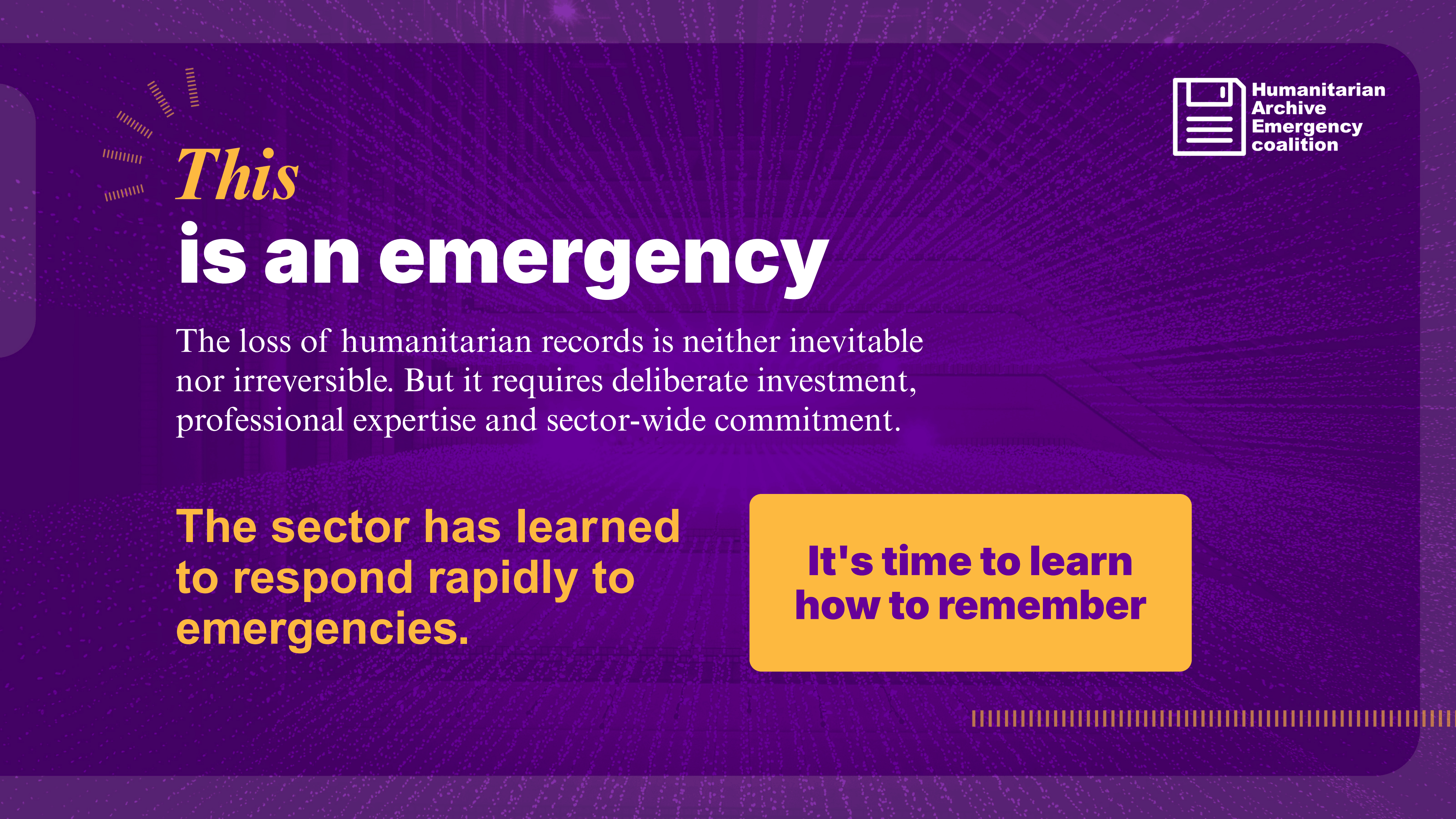
the loss of humanitarian records is neither inevitable nor irreversible. However, meaningful preservation will require deliberate investment, professional expertise, and sector-wide commitment. Without action, future generations may find no record of many humanitarian crises or of the people whose lives were shaped by them. The humanitarian sector has learned how to respond rapidly to emergencies; it must now learn, with equal determination, how to remember.
What needs to happen next?
The report sets out a roadmap for action, beginning with the immediate stabilisation of vulnerable collections. Longer term, it calls for stronger governance and decision-making, investment in regional preservation capacity and the integration of responsible archival practice into everyday humanitarian operations.
The central message is clear: the loss of humanitarian records is not inevitable. Solutions already exist, but safeguarding humanitarian memory will require deliberate investment, professional expertise and collective action across the sector.
Without that action, we risk losing not only the history of humanitarian responses, but records of the people and communities at the heart of them.
About this report
The Humanitarian Archive Emergency (HAE) Project is led by the Humanitarian and Conflict Response Institute at the University of Manchester with Elrha, and funded by Wellcome and the Leverhulme Trust. This report was researched and written by Key Aid Consulting and the Institute of Development Studies. The organisations listed below have endorsed it.
No items found.
Other resources
explore all resources
Impact Case Study: Supporting refugees with clean cooking fuel in humanitarian crises
Final Report: Embedding Cognitive Processing Therapy in the DRC Health Systems
Unite for a Better Life: The Programme Basics