


Smart Discharges for refugee children: Improving hospital-to-community care transitions

Project overview
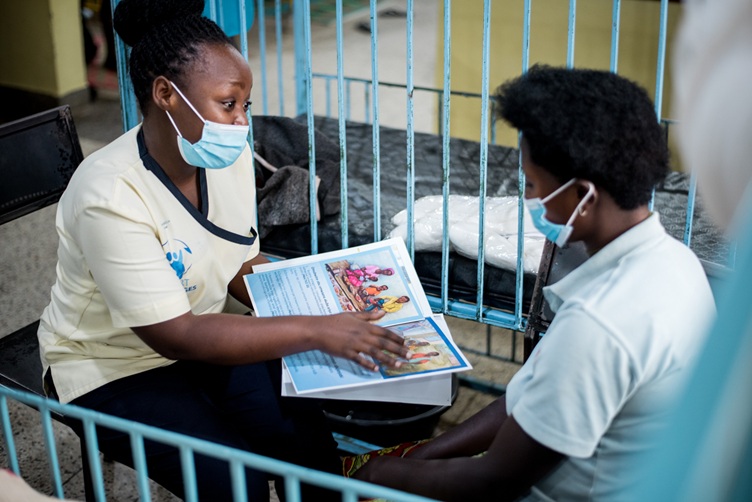
This study, carried out in Lamwo District, Uganda, examined what happens to children admitted with suspected sepsis after they leave the hospital. The findings provide critical new insights that will enable providers, caregivers, and community health workers (CHWs) to improve health outcomes and reduce child deaths.
Project solution
This project offers [specific solution or intervention] to tackle [challenge]. By implementing [strategies, tools, or innovations], the project aims to achieve [desired outcomes]. The approach is designed to [specific actions or methods] to bring about meaningful change in [community, region, or issue area].
Expected outcomes
This project aims to achieve [specific outcomes], such as [measurable results, improvements, or changes]. The expected impact includes [benefits to the target community, advancements in research or innovation, or long-term effects]. By the end of the project, we anticipate [specific changes or milestones] that will contribute to [broader goals or objectives].

Dr. Nathan Kenya-Mugisha, PI
WALIMU
The ability to identify children at-risk of poor post-discharge outcomes is of paramount importance, especially within vulnerable refugee settings. This critical information enables us to allocate limited resources towards improving the hospital-to-community transition more efficiently. Such programs not only save lives and resources but are more likely to be scalable in economically strained environments.
Principal Investigators: Dr. Nathan Kenya-Mugisha and Dr. Matthew Wiens
Research Snapshot: Reducing child mortality after hospital care
This study, carried out in Lamwo District, Uganda, examined what happens to children admitted with suspected sepsis after they leave the hospital. The findings provide critical new insights that will enable providers, caregivers, and community health workers (CHWs) to improve health outcomes and reduce child deaths.
[.cta_link]Read the Snapshot[.cta_link]
What did the study set out to achieve?
Uganda hosts over 1.5 million refugees, many in northern districts such as Lamwo. Severe infectious diseases are the leading causes of death in both refugee and non-refugee populations in Uganda, and post-discharge mortality has been demonstrated to be a major contributor to paediatric deaths in low-resource settings. Yet, there is currently no data on post-discharge vulnerability and outcomes for refugee or host community children living within this context, alongside a lack of effective tools to support transitions to community care.
Smart Discharges, a comprehensive quality improvement initiative that use simple risk-prediction models to provide personalised post-discharge care, was evaluated in this landmark prospective study. Outcomes were tracked for 1185 children leaving hospitals after sepsis treatment. Mortality rates were similar between refugee and host community children, with higher than expected re-admission rates; perhaps indicating positive care-seeking behaviours. Results suggest Smart Discharges can help improve the transition from hospital to community care in humanitarian settings and beyond.
What were the key findings?
- Of the 1,205 children, 98.3% were successfully followed for six months after hospital discharge. Mortality rates were similar between refugee and non-refugee children (1.6% vs 1.8%). This finding is significant because previous, larger, Smart Discharges research from non-refugee settings in Uganda reported much higher mortality rates (5 -8%).
- Overall 38.7% of children were readmitted within six months, with higher rates among refugee children (41.3% vs 35.9%). This contrasts with the 18% readmission observed in prior non-refugee studies.
- Refugee children had a higher prevalence of malnutrition, malaria positivity, severe anaemia, and gastrointestinal symptoms such as vomiting and diarrhoea, and were more often referred on first presentation, suggesting a higher illness severity at the start of care.
- Smart Discharges risk models can accurately stratify children according to risk, enabling riskbased post-discharge care.
What does this mean for policymakers and practitioners?
Comparable outcomes between refugee and host community children challenge assumptions that refugee children experience disproportionate mortality risk and poor care-seeking after discharge. Frequent readmissions and high follow-up completion demonstrate that refugee caregivers actively seek care and can be effectively included in follow-up-based interventions.
These findings point to advantages of integrating Smart Discharges, a program using a riskdifferentiated care approach to post-discharge follow-up, into clinical workflows. This approach is now implemented routinely in 5 facilities in Lamwo District, following the training of over 300 CHWs and 40 facility-based health workers. Its ongoing implementation shows potential to reduce preventable poor health outcomes. Embedding such tools within humanitarian settings enables targeted, equitable use of limited resources and supports continuity of care.
Smart Discharges platform launched as part of Smart Quality Improvement (Smart QI) platform
Smart Discharges is a digital health programme within the Smart QI Platform. Smart QI uses data-driven risk prediction to target interventions towards mothers, newborns, and children during the patient journey – from triage to post-discharge. The goal is to provide the right intervention at the right time to the right patient, envisioning the development of health system efficiency through simple and cost-effective digital innovations.
[.cta_link]View the platform[.cta_link]
Project delivery & updates
Stay up to date with the latest developments from this project. Here, you will find details on what has been delivered, resources created, and regular updates as the project progresses. Access key documents, reports, and other materials to see how the project is making an impact.
Resources
Article
LEARN MOREArticle
LEARN MORE