


Reducing violence against health care in DRC and Iraq via citizen science and de-escalation trainings

Project overview
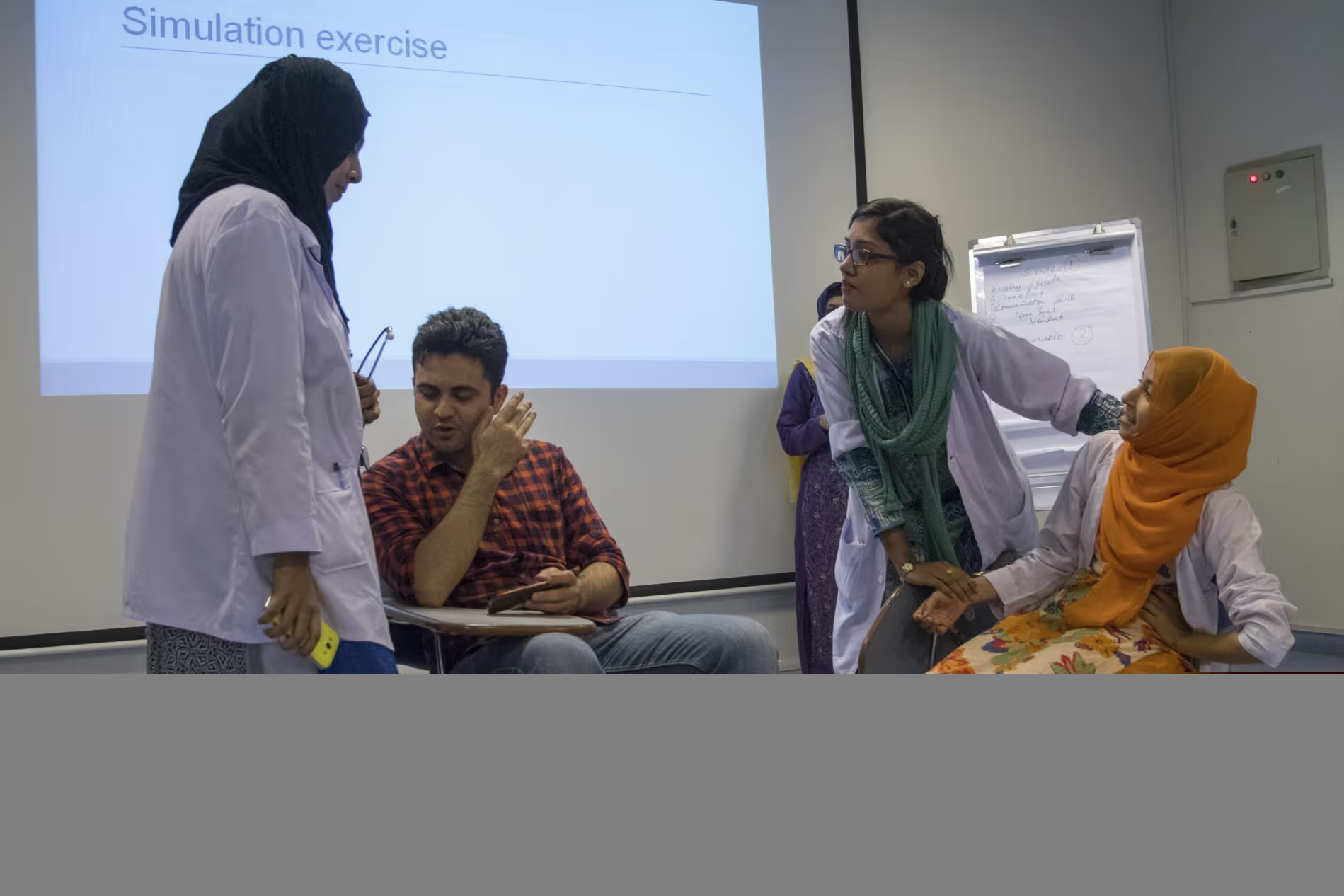
Violence against healthcare workers (HCWs) is depriving thousands of people of their rights to healthcare. This study focused on the challenge of non-military violence against HCW in post-crisis humanitarian settings.
Countries
Democratic Republic of Congo
Iraq
Organisations
Swiss Tropical and Public Health Institute
Partners
International Committee of the Red Cross (ICRC), Catholic University of Bukavu (UCB), Mustansiriyah University
Area of funding
Humanitarian Research
Grant amount
£397,984
Start date
01
November
2021
End date
31
March
2025
Project length (in months)
40
Funding calls
Focus areas
Topics
Health systems and services
Violence against health care workers
Status
Closed
Project solution
This project offers [specific solution or intervention] to tackle [challenge]. By implementing [strategies, tools, or innovations], the project aims to achieve [desired outcomes]. The approach is designed to [specific actions or methods] to bring about meaningful change in [community, region, or issue area].
Expected outcomes
This project aims to achieve [specific outcomes], such as [measurable results, improvements, or changes]. The expected impact includes [benefits to the target community, advancements in research or innovation, or long-term effects]. By the end of the project, we anticipate [specific changes or milestones] that will contribute to [broader goals or objectives].
From the Healthcare in Danger Strategy 2020-2022
ICRC
While respect for health workers is declining it will not be possible to devise strategies to protect health care without evidence base. Health workers form part of the intellectual elites which is particularly propitious for generating , together with communities , quality evidence on patterns of violence and the effectiveness of activities to prevent it.
Principal Investigators: Sonja Merten, Swiss Tropical and Public Health Institute; Ghislain Bisimwa, Université Catholique de Bukavu; Riyadh Lafta, Mustansiryah University.
Research Snapshot: Testing interventions to address violence against health care workers
This study aimed to investigate the triggers of violence against HCWs in DRC and Iraq. It tested two interventions targeting different levels of the health system: a facility-level Code of Conduct (CC), co-developed with HCWs and community stakeholders, and a de-escalation training (IT) to strengthen individual HCWs’ skills in managing violence. Findings showed that the code of conduct reduced verbal and physical violence, particularly in Iraq, with sustained effects over time. In contrast, individual de-escalation training showed only short-term gains.
[.cta_link]Read the Research Snapshot[.cta_link]
What did the study set out to achieve?
Violence against healthcare workers (HCWs) and alarming levels of distrust towards the medical profession is a humanitarian issue with long-term consequences especially in fragile and conflict settings.
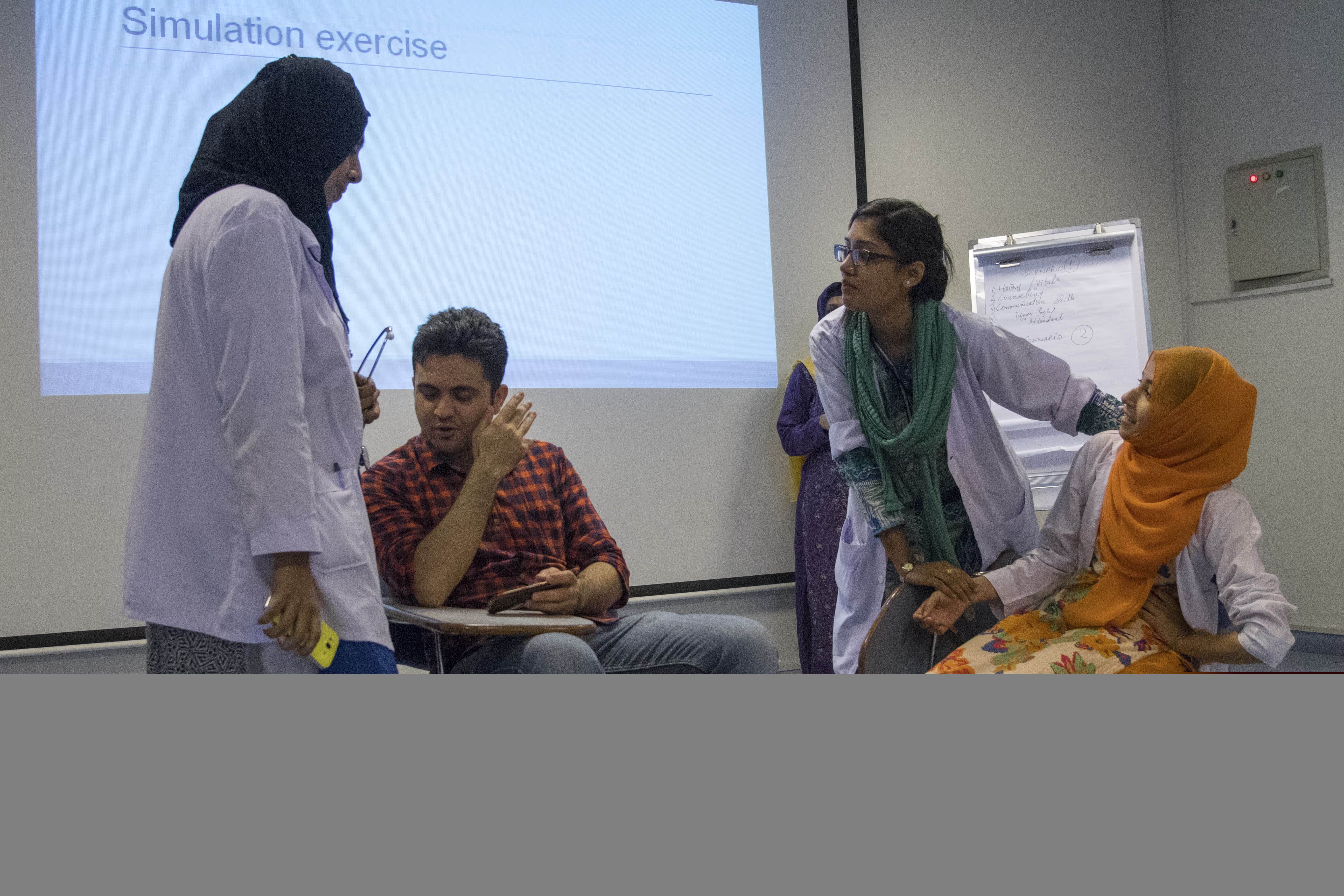
This research aimed to evaluate the effectiveness of a violence de-escalation training for HCWs in combination with an organisational level intervention that may further contribute to curb the violence. For this purpose, a community-developed set of rules was implemented in health facilities and hospitals via a displayed code of conduct. Citizen science and other participatory methods were used to facilitate community engagement and increase community trust in HCWs. The validation of the code of conduct by government and health authorities aimed to ensure the code of conduct was enforced effectively.
Using mixed methods this study explored the triggers and drivers of violence, and generated robust evidence on the effectiveness, cost, and consequences of the intervention to address violence against HCWs in two fragile contexts - the Democratic Republic of the Congo (DRC) and Iraq. The study tested the impact of the violence de-escalation training only (IT), code of conduct only (CC), and the combined intervention of both training and code of conduct (IT+CC).
The research builds on work of the ICRC Healthcare in Danger initiative.
What were the key findings?
- Violence was widespread at baseline. 96% of DRC HCWs and 65% of Iraqi doctors reported verbal abuse; ~11% reported physical violence in both settings. Reports of sexual violence and financial misconduct were present but less frequent.
- Perpetrators varied: in Iraq, violence came from patients and their relatives; in DRC, colleagues were also frequent perpetrators.
- Drivers of violence were at system and interpersonal levels. In Iraq, they included public mistrust, lack of institutional protection, poor communication, and absence of visitor rules. In DRC, drivers were hierarchical tensions, weak supervision, confidentiality breaches, and long wait times. These informed the CC in both settings.
- CC-only intervention had the most consistent and durable impact in Iraq, and significantly reduced verbal and physical abuse in DRC.
- IT-only showed short-term improvements in both countries, but effects weakened over time.
- Combining CC+IT did not enhance outcomes and may have diluted impact, especially in Iraq.
- Burnout and PTSD was high in both settings. Burnout decreased most with the Iraq CC-only intervention, but there was no impact on PTSD.
What does this mean for policymakers and practitioners?
The study demonstrates that addressing workplace violence is not only about protecting individuals, but also about strengthening health system structures - from workforce protection and facility governance to quality service delivery and community trust.
Participatory and contextualised interventions like facility-level codes of conduct and individual-level de-escalation training can serve as practical tools for integrating violence prevention into routine health system functions, especially in settings where health systems are already under pressure.
For humanitarian and health actors in fragile settings, these findings highlight the need to invest in health system resilience by institutionalising violence prevention strategies that respond to local drivers and reinforce accountability and trust.
Future research should explore how the effects of these interventions can be institutionalised and sustained.
No items found.
Project delivery & updates
Stay up to date with the latest developments from this project. Here, you will find details on what has been delivered, resources created, and regular updates as the project progresses. Access key documents, reports, and other materials to see how the project is making an impact.
No resources/updates have been published yet for this project. Sign up for our newsletter to stay informed about upcoming publications and updates!
Join our Newsletter
Resources
Violence against health care workers in a crisis context: a mixed cross-sectional study in Eastern Democratic Republic of Congo
Journal article
LEARN MOREResearch Snapshot: Testing interventions to address violence against health care workers
Research snapshot
LEARN MOREStudy Protocol: Understanding context of violence against healthcare through citizen science and evaluating the effectiveness of a code of conduct and of a de‑escalation of violence training
Journal article
LEARN MOREThe 'Epidemic' of violence against junior doctors in Baghdad: reasons, impact and consequences
Journal article
LEARN MORECommunity Members’ View about Violence against Health Workers: A Qualitative Study
Journal article
LEARN MORELatest updates
No items found.