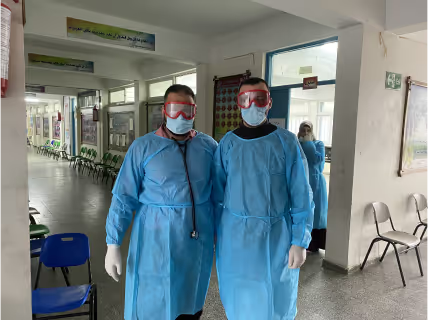


Supporting Reproductive Autonomy in Refugee Settings through ARCHES Community Intervention

Project overview
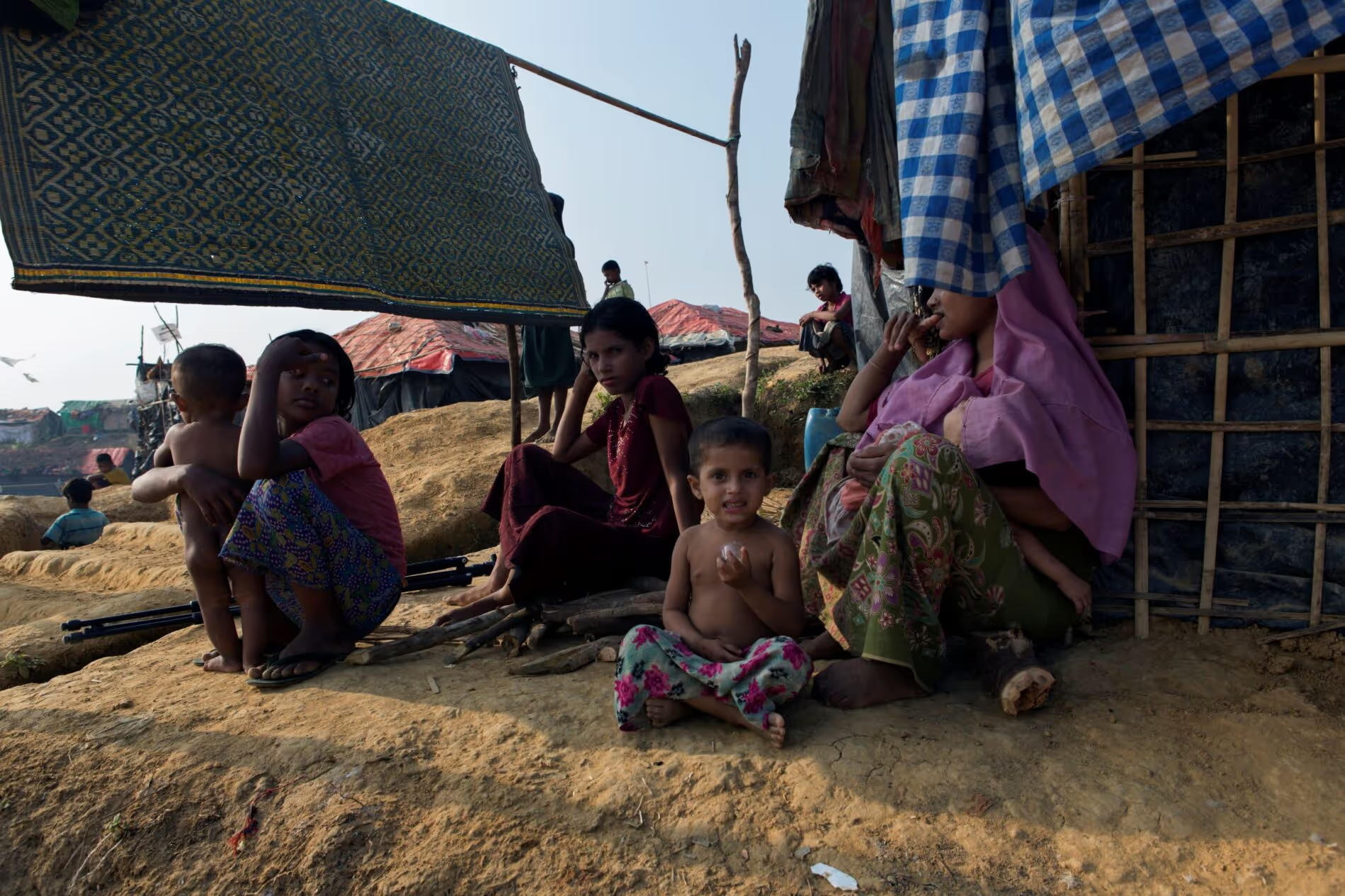
The ARCHES (Addressing Reproductive Coercion in Health Settings) intervention, originally implemented in clinics was successfully adapted for community use to reach refugee women and girls unable to easily access these facilities. Delivered through Women-Friendly Spaces, the model combined 1-2-1 and group counselling, visual tools and referral pathways to reach over 6,300 women and girls in Camps 7 and 10 of Bangladesh's Rohingya Refugee Camp
Project solution
This project offers [specific solution or intervention] to tackle [challenge]. By implementing [strategies, tools, or innovations], the project aims to achieve [desired outcomes]. The approach is designed to [specific actions or methods] to bring about meaningful change in [community, region, or issue area].
Expected outcomes
This project aims to achieve [specific outcomes], such as [measurable results, improvements, or changes]. The expected impact includes [benefits to the target community, advancements in research or innovation, or long-term effects]. By the end of the project, we anticipate [specific changes or milestones] that will contribute to [broader goals or objectives].
WHAT HUMANITARIAN NEED WAS ADDRESSED?
Refugee women are at high risk of experiencing intimate partner violence (IPV). Reproductive coercion (RC) is a form of IPV that includes male partner's interference with a woman’s access to or use of contraception or decisions regarding a pregnancy.
Through our first HIF project, we found that 70% of women who came to facilities for family planning (FP) and abortion services experienced IPV and 22% experienced RC. The project’s technical advisory group felt that the project missed a group of women at heightened risk of violence, namely, refugee women that are unable to access facility-based care. The current project will create a community-based ARCHES intervention, spreading the impact of the intervention to reach this vulnerable group.
HOW DID THE INNOVATIVE SOLUTION IMPACT HUMANITARIAN PRACTISE?
Findings revealed that disclosure of RC and IPV to the midwife reported was high (63% and 68%, respectively). Among those who disclosed IPV, 80% were offered a referral for IPV support services, and among those offered a referral, 41% accepted. Results show a 13% increase in contraceptive self-efficacy (Beta=0.66; 95% CI: 0.44–0.89), 13% increase in self-efficacy to use IPV support services (Beta=0.25; 95% CI: 0.18–0.31), and a 17% improvement in attitudes toward RC (Beta=3.60; 95% CI: 2.93–4.27), highlighting significant gains in sexual and reproductive health (SRH) outcomes.
The integration of Community Health Workers (CHWs) was key to reaching women unable to access facility-based services. Using light-touch counselling with visual tools and information cards, CHWs created safe, trusted spaces for women to explore FP and IPV concerns. Many women reported increased confidence to make reproductive decisions despite opposition from partners or family
WHAT PROGRESS WAS ACHIEVED AND WHAT WERE THE KEY LEARNINGS?
The project developed a community-based adaptation of the ARCHES model, using Women Friendly Spaces (WFSs) as safe, trusted places for confidential counselling. Community Health Workers (CHWs) and Volunteers (CHVs) were trained on the light-touch intervention, given referral tools and equipped with counselling materials such as flipcharts, job aids and posters. This strengthened links between communities and health facilities, making support more accessible for women and girls at risk of intimate partner violence (IPV) and reproductive coercion (RC). To date, over6,000 women and girls have been reached, showing improved confidence in contraceptive use, greater use of IPV services, and more supportive attitudes toward reproductive choice.
Key learnings:
- Safe, welcoming spaces are essential for reaching those most at risk.
- Offering both group and one-on-one counselling meets different needs.
- Training local providers and building referral systems creates a model that can be sustained and scaled up.
FUTURE POTENTIAL AND LESSONS FOR INNOVATION?
Building on its success in health facilities, the ARCHES intervention has been scaled up to 40 facilities in Cox’s Bazar, reaching over 117,000 women and girls between October 2023 and June 2025 with support from The United Nations Population Fund (UNFPA). At the community level, more than 6,000 women and girls received one-to-one or group counselling during June 2024–March 2025, demonstrating that a combined facility-community approach can reach those most at risk.
Dissemination events with government officials, development partners, UN agencies, NGOs, and researchers generated strong interest in expanding the integrated model to all camps, multipurpose centres, delivery units, and even development settings for the Bangladeshi population.
Key recommendations included continued training for CHWs and community health volunteers CHVs, sustained community visits by midwives, and ongoing counselling services at both the community and facility level to improve voluntary contraceptive uptake. Further research is needed to explore long-term impact and retention of the ARCHES intervention, test scalable group counselling approaches tailored towards different age groups and assess the effectiveness of multiple-session models.
Project delivery & updates
Stay up to date with the latest developments from this project. Here, you will find details on what has been delivered, resources created, and regular updates as the project progresses. Access key documents, reports, and other materials to see how the project is making an impact.
Resources
Research brief
LEARN MORECase study
LEARN MORE