


Increasing the effectiveness of handwashing among people affected by crisis: an evaluation of the Jengu handwashing facility

Project overview
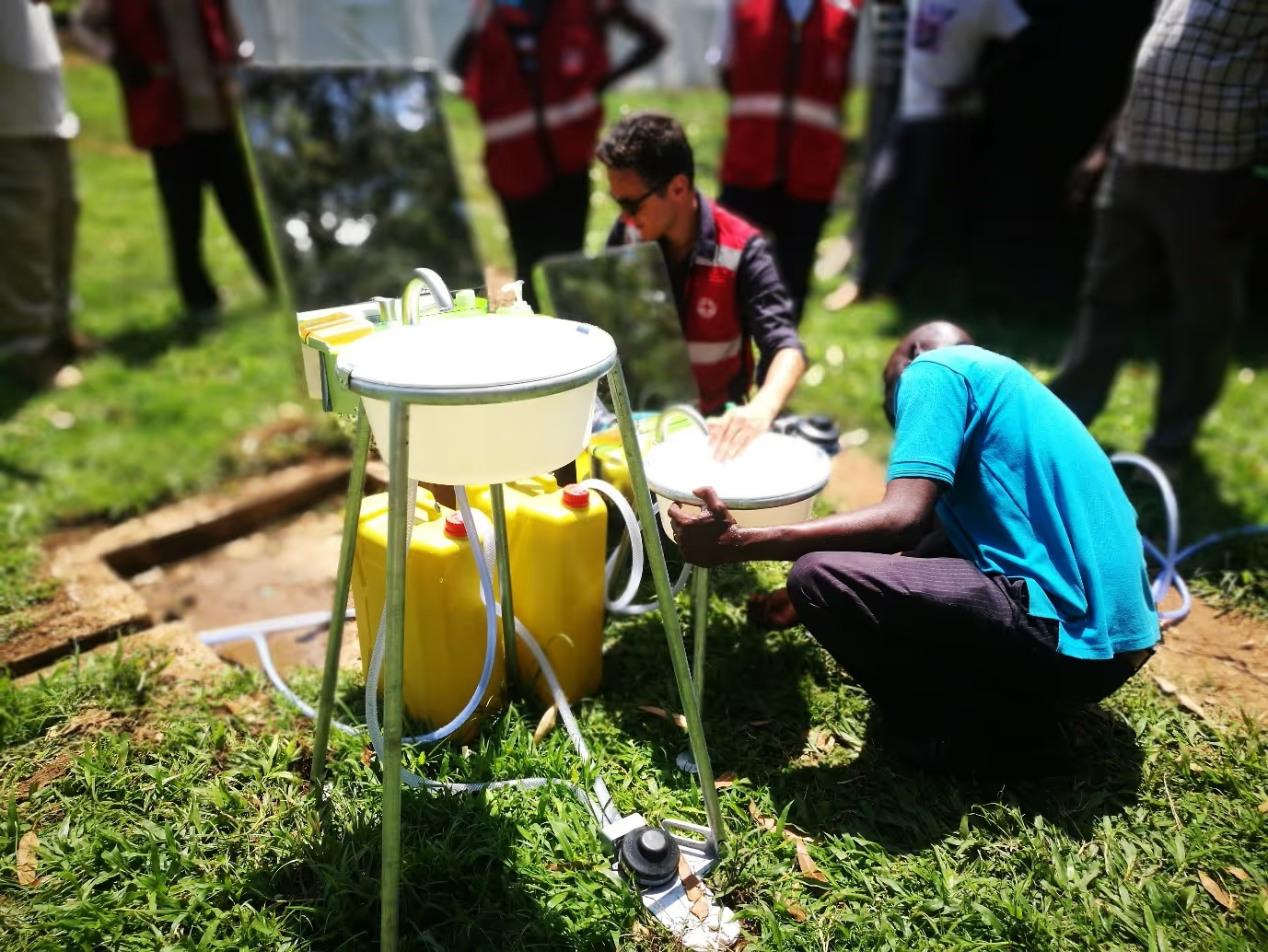
This study sought to understand the effect of the provision of soap and the Jengu handwashing facility on hand washing with soap among crisis-affected populations in Dadaab Refugee Camp, Kenya and Kyangwali Refugee Settlement, Uganda.
Countries
Kenya
Uganda
Organisations
British Red Cross
Partners
APHRC, IFRC, Field Ready, LSHTM, Kenya Red Cross, Uganda Red Cross, ARUP
Area of funding
Humanitarian Research
Grant amount
£564,071
Start date
01
December
2021
End date
30
June
2025
Project length (in months)
Project solution
This project offers [specific solution or intervention] to tackle [challenge]. By implementing [strategies, tools, or innovations], the project aims to achieve [desired outcomes]. The approach is designed to [specific actions or methods] to bring about meaningful change in [community, region, or issue area].
Expected outcomes
This project aims to achieve [specific outcomes], such as [measurable results, improvements, or changes]. The expected impact includes [benefits to the target community, advancements in research or innovation, or long-term effects]. By the end of the project, we anticipate [specific changes or milestones] that will contribute to [broader goals or objectives].
Sheillah Simiyu
African Population and Health Research Center (APHRC)
Robust evaluation of interventions taking place during epidemics is challenging, but very important to ensure that the activities are working as effectively as possible to stop transmission. This research will provide evidence on local production and supply of handwashing infrastructure, hand hygiene habits in crisis affected populations, and how hand hygiene habits can be initiated and sustained over time. This evidence could have an impact on reducing disease transmission and improving health in crisis-affected settings .

Naoko Kozuki
Principal Investigator
Community engagement is widely recognised as a crucial component of effective Ebola preparedness and response efforts. Lessons from North Kivu to date highlight the need to invest in continued learning and finding new ways and approaches to achieve effective community engagement across response components. This study will look at community engagement to support improvements in infection, prevention and control activities at health facilities.
Principal Investigators: Sheillah Simiyu, APHRC & Sian White, LSHTM
Research Snapshot: Increasing access to handwashing facilities in crisis-affected populations
This study found that novel handwashing facilities (Jengu units) integrating emotional motivators (a mirror, attractive features, scented soap) show promise as an acceptable, desirable intervention for crisis-affected populations. With appropriate adaptations for local production and distribution to improve durability, the Jengu units can be a solution for handwashing with soap in humanitarian settings.
[.cta_link]Read the Snapshot[.cta_link]
What did the study set out to achieve?
Crisis-affected populations experience higher morbidity and mortality from diarrheal, respiratory and other outbreak-prone diseases. Improved hygiene practices, such as handwashing with soap, substantially reduce such risks. Handwashing facilities are not always desirable, durable, or deployable in humanitarian settings. The Jengu handwashing unit was created to address these limitations, making handwashing with soap desirable, convenient and habitually performed. Little evidence existed on appropriate handwashing solutions, or on the impact of these on handwashing behaviour over time.
This randomised controlled study sought to understand the effect of the provision of soap and the Jengu handwashing facility on hand washing with soap among crisis-affected populations in Dadaab Refugee Camp, Kenya and Kyangwali Refugee Settlement, Uganda. The study enrolled 600 households, split between intervention (Jengu facilities and soap) and control (soap only) groups.
What were the key findings?
The study found that novel handwashing facilities (Jengu units) integrating emotional motivators (a mirror, attractive features, scented soap) show promise as an acceptable, desirable intervention for crisis-affected populations. With appropriate adaptations for local production and distribution to improve durability, the Jengu units can be a solution for handwashing with soap in humanitarian settings. Additional behaviour change messaging may be needed to ensure handwashing with soap is prioritised over water alone.
- In Uganda, handwashing with soap was 3.41 x (control) and 4.19 x (intervention) higher at endline.
- In Kenya, handwashing with soap was 1.86 x (control) and 2.11 x (intervention) higher at one month post distributions. By endline, both groups were still higher than baseline: 1.72 x (intervention) and 1.98 x (control).
- In both countries, handwashing with soap was higher at endline- but still less than handwashing with water alone. The endline was conducted 2 months+ from last soap distribution in each setting.
- In both settings, self-reported diarrhea rates declined overall, more significantly in the intervention groups: from 15% to 5% in Dadaab; and from 20% to 6%, in Kyangwali.
- Manufacture costs were higher than traditional hardware (£98.28/ unit). Full delivery costs/ unit were also high, considering 1 year durability.
- Units were appreciated locally as hygienic, convenient and attractive, with interest in wider distribution.
What does this mean for policymakers and practitioners?
The Jengu units were positively received by communities. They provided an initial boost to handwashing with soap, contributing to improved health outcomes, showing promise as an acceptable, desirable intervention for humanitarian settings. Provision of soap was also positively received.
However, low durability of their basins reduced impact and cost-benefit of the intervention over time, particularly in Kenya, compared with providing soap alone. The handwashing facilities were always placed in compounds to allow all user access, exposing them to direct sun and harsh weather, making them vulnerable to breakage. Use of more resilient basins will increase durability and lifespan, and local alternatives to the foot pump could improve user experience. Local unit manufacture could help to reduce production and delivery costs and maintain community ownership, improving sustainability.
The dependency on using water alone for handwashing needs could be linked with limited soap availability at endline, and the frequency of breakdown of the Jengu unit basins. Additional behaviour change messaging may be needed to ensure handwashing with soap is prioritised over using water alone.
No items found.
Project delivery & updates
Stay up to date with the latest developments from this project. Here, you will find details on what has been delivered, resources created, and regular updates as the project progresses. Access key documents, reports, and other materials to see how the project is making an impact.
No resources/updates have been published yet for this project. Sign up for our newsletter to stay informed about upcoming publications and updates!
Join our Newsletter
Resources
Effectiveness of the Jengu Handwashing Facility to Increase Handwashing with Soap among Crisis-affected Populations in Kenya and Uganda
Research brief
LEARN MOREHandwashing with soap and influencing factors in crisis-affected refugee populations in Kenya and Uganda
Journal article
LEARN MORELatest updates
No items found.