


Gisa Group: Sudan Emergency Response Rooms Open-Source Humanitarian Fund Management Platform



This project is now closed.
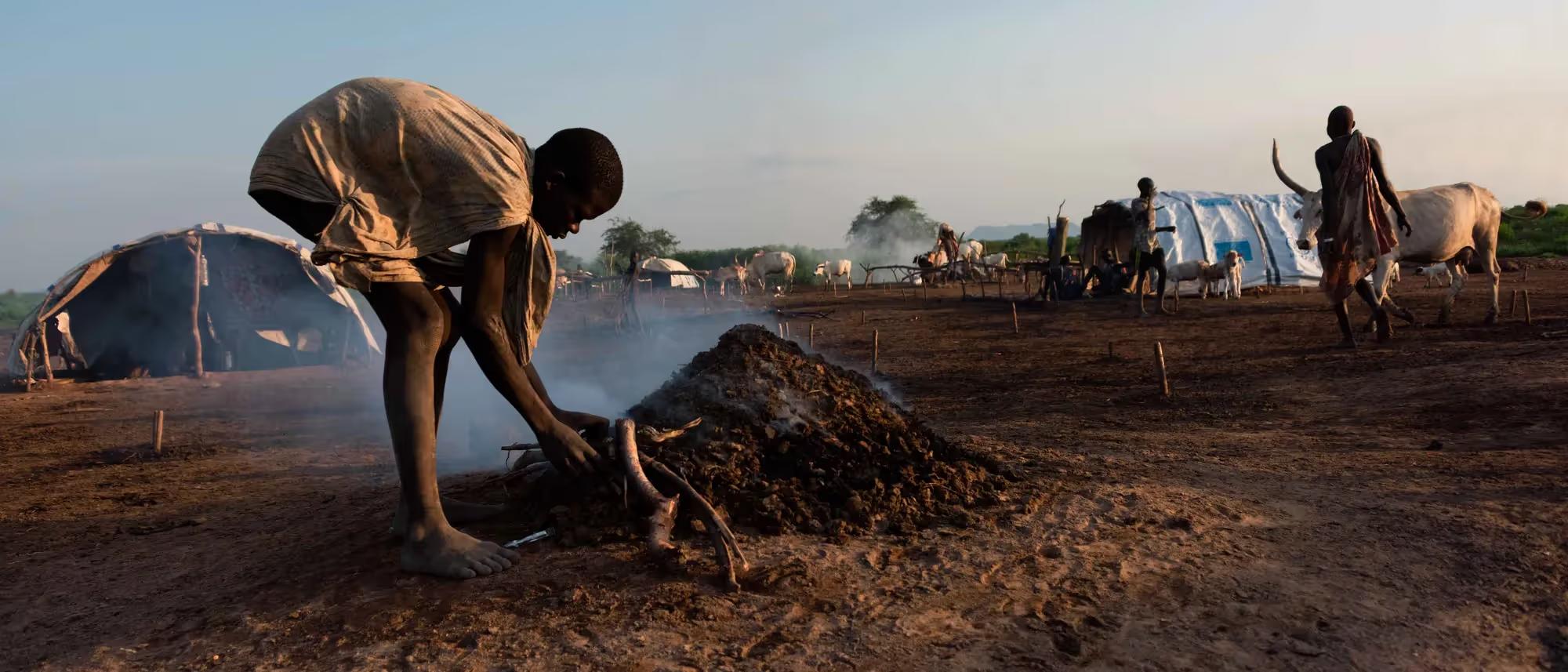
The conflict in Sudan has compounded a grave and protracted humanitarian emergency in the country. As a result, half of Sudan’s population required humanitarian assistance, with millions displaced into internally displaced persons (IDP) camps and many more on the brink of famine. With international non-governmental organisations (INGOs) and United Nations agencies limited in their ability to respond, Emergency Response Rooms (ERRs) have filled the gap.
Formed in April 2023, the Sudan ERRs provided urgent humanitarian aid to millions of displaced and vulnerable individuals. Despite limited resources, ERRs delivered critical services like community kitchens, evacuation centres, and clinics.
As they scale, ERRs faced challenges in improving financial and impact accountability and developing a locally owned and open-source digital infrastructure.
The ERRs need a standardised and accessible digital solution to track fund allocations, document spending, and report outcomes to the Sudan Logistics and Coordination Committee (SLCC). Without this, they struggle to meet fundraising targets and report back to donors. Additionally, ensuring long-term sustainability requires a locally owned and open-source platform to empower Sudanese developers and create scalable infrastructure.

This project aimed to support the ERRs in managing these humanitarian funding workflows through the development of an open-source digital platform. The project sought to pilot this digital solution, scaling it to ERRs nationwide, and developing a governance framework to ensure local ownership and sustainability. To achieve this, GISA Group conducted the following activities:
- Development and Piloting: Continued the development and piloting of the open-source digital platform and scale the digital solution to 350 ERRs.
- Governance Frameworks: Established a governance framework in collaboration with ERRs and relevant stakeholders to ensure sustainable and safe deployment.
- Localisation Roadmap: Developed a sustainability roadmap to ensure local ownership and future localised development.
- Lessons Learned: Produced a lessons learned report to provide recommendations for the development of similar tools in other humanitarian crises.
This project was led by Gisa Group. Key stakeholders included Sudanese communities, Sudan Localisation Coordination Council, Mutual Aid Sudan Coalition, technical partners, humanitarian NGOs, and institutional donors.
Attachments
Tenets for Localising Aid Emergency Response Rooms in Sudan