


Guidelines and mHealth to Improve Quality of Hypertension and Type 2 Diabetes Care for Vulnerable Populations in Lebanon: Longitudinal Cohort Study


UKHIH Publication
S. Doocy, K. Paik, E. Lyles, H. Tam, Z. Fahed, E. Winkler, K. Kontunen, A. Mkanna, G. Burnham
18
October
2017
Output type
Journal article
Location
Lebanon
Focus areas
No items found.
Topics
No items found.
Programme
Humanitarian Research
Organisations
No items found.


Given the protracted nature of the crisis in Syria, the large noncommunicable disease (NCD) caseload of Syrian refugees and host Lebanese, and the high costs of providing NCD care, the implications for Lebanon’s health system are vast.
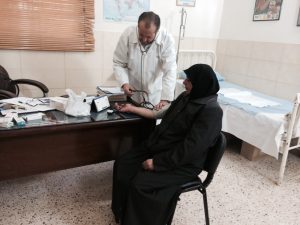
The aim of the study was to evaluate the effectiveness of treatment guidelines and a mobile health (mHealth) app on quality of care and health outcomes in primary care settings in Lebanon.
A longitudinal cohort study was implemented from January 2015 to August 2016 to evaluate the effectiveness of treatment guidelines and an mHealth app on quality of care and health outcomes for Syrian and Lebanese patients in Lebanese primary health care (PHC) facilities.
No items found.
Attachments
Other resources
explore all resources
Final Report: Chemical water quality and impacts on the treatment of severely malnourished infants and children
Development of a Prediction Model for the Management of Noncommunicable Diseases Among Older Syrian Refugees
Evidence from the frontline: Mental health in crisis affected contexts, episode 2: Child friendly spaces