


Research Snapshot: Delivering Psychological Treatment to Refugee Children via Telephone



Most Syrian refugee families living in settlements in Lebanon face barriers to accessing healthcare and support, including mental health services. However, most have access to a mobile phone which provides an opportunity for accessing therapy remotely. This study examined whether an existing evidence-based treatment – Common Elements Treatment Approach (CETA) – adapted for delivery over the phone (t-CETA) could overcome these barriers.
The team found that t-CETA was feasible, acceptable, and reduced symptoms of mental health problems in children, while helping to overcome access barriers. Findings show that phone-based mental health services may be a promising solution for providing mental health support to refugee children in crisis settings. A larger trial could strengthen these findings and improve understanding of efficacy.
The study team also produced practical guidance to support humanitarian actors in delivering telephone-based mental health services, to help overcome common challenges that can arise during service delivery.
This snapshot contains key messages, findings, implications for humanitarian policymakers and practitioners and recommendations for further research.
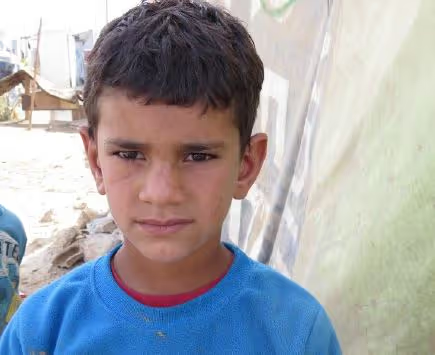
Photo: Syrian boy in an informal tented settlement in the Beqaa region of Lebanon. Photo credit © Nour Tayeh / Médecins du Monde France, Lebanon (2017)